
Q: 1
Which two steps should be taken to provision a phone after the Self-Provisioning feature was
configured for end users? (Choose two.)
Options
Discussion
B. not D. The extra CoS value in D is a common distractor. Seen it like this in practice.
Probably B and D
I don’t think it’s B. A. The question asks for trusting tagged traffic with a CoS value, so "platform qos trust extend cos 3" looks right to me. Pretty sure B is a trap here.
Its B here, seen this type in the official guide and labs. Unless the question wants a set CoS value, you just trust extend for CDP-capable devices like IP phones. Someone correct me if new exam versions flip this.
Probably B, matches up with similar exam questions I’ve seen. The syntax is clear and the option stands out here.
B and D for sure, that's the recommended self-provisioning workflow in all the official Cisco docs and labs I've used. If you want extra details or hands-on, try the official lab guide or their practice exams to really nail down this process. Open to other takes if someone has seen an odd scenario.
B or D, but E is tempting if you don't catch that self-provisioning skips the manual key combos. Seen similar questions where people pick C or E by mistake, but the IVR (D) and just getting it online (B) are really what Cisco expects here. Let me know if there's a weird CUCM version scenario I'm missing.
B and D tbh, plugging in and dialing the self-provisioning IVR is what's needed. A is a common trap here.
B and D look right to me. You just need to plug the phone in (B) so it boots and registers, then have the user dial the self-provisioning IVR extension (D) to finish the association. That's how Cisco wants it done for Self-Provisioning, according to official guides and labs. If anyone's seen otherwise on recent exam practice, let me know.
Nah, not A or C, both are there to distract. B and D are correct here.
Be respectful. No spam.
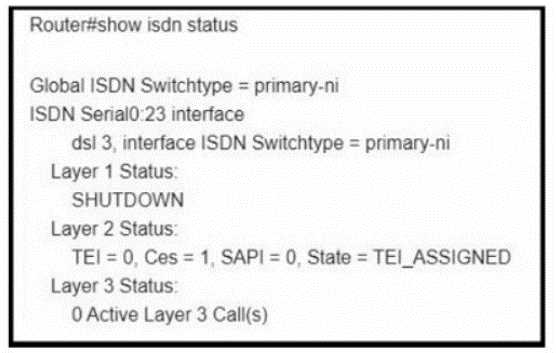 Refer to the exhibit. Users at a company located In New York cannot place calls. The New York gateway is configured with
P-199
a T1 ISDN PRI card with 24 channels. The engineer runs the show isdn status command and receives output. Which
action must the engineer take to resolve the issue?
Refer to the exhibit. Users at a company located In New York cannot place calls. The New York gateway is configured with
P-199
a T1 ISDN PRI card with 24 channels. The engineer runs the show isdn status command and receives output. Which
action must the engineer take to resolve the issue?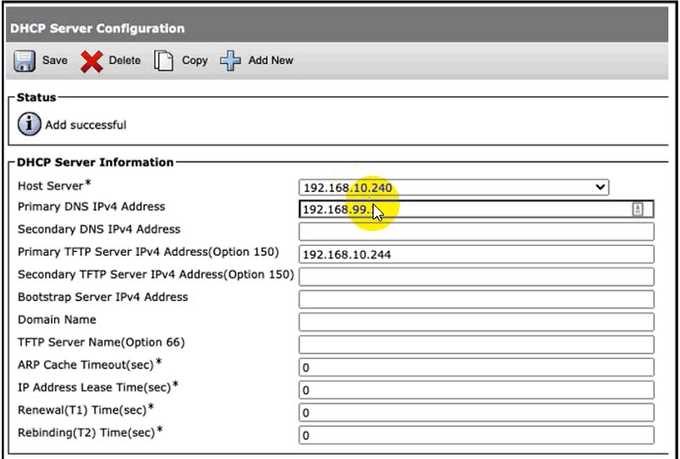 P-31
P-31
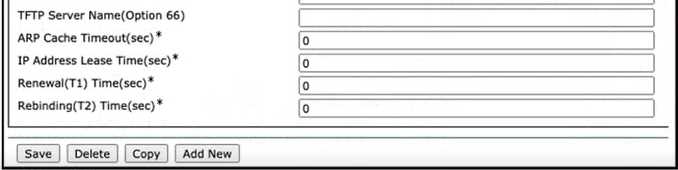 Refer to the exhibit. A collaboration engineer configures Cisco UCM to act as a DHCP server. What
must be done next to configure the DHCP server?
Refer to the exhibit. A collaboration engineer configures Cisco UCM to act as a DHCP server. What
must be done next to configure the DHCP server?