
Q: 8
Refer to exhibit.
 P-31
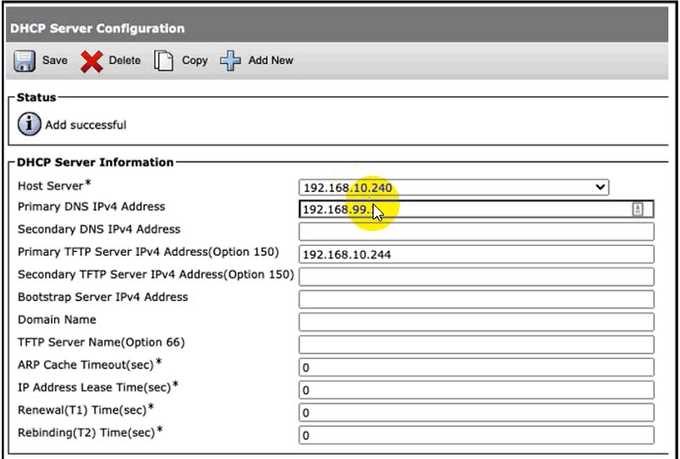
Refer to the exhibit. A collaboration engineer configures Cisco UCM to act as a DHCP server. What
must be done next to configure the DHCP server?
P-31
Refer to the exhibit. A collaboration engineer configures Cisco UCM to act as a DHCP server. What
must be done next to configure the DHCP server?
 P-31
P-31
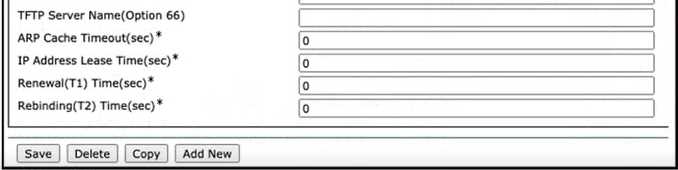 Refer to the exhibit. A collaboration engineer configures Cisco UCM to act as a DHCP server. What
must be done next to configure the DHCP server?
Refer to the exhibit. A collaboration engineer configures Cisco UCM to act as a DHCP server. What
must be done next to configure the DHCP server?Options
Discussion
Option A is correct here. SRST lets phones reregister automatically to the publisher when connectivity to the subscriber fails. Device Pool just groups settings, doesn’t handle failover directly. Seen this a lot in practice configs.
Option A is it. SRST provides that fallback registration when the subscriber connection drops. Device Pool (D) only tells the phone which call manager group to use, doesn't handle reregistration itself. Seen this on similar exam questions, but happy if someone thinks otherwise.
Maybe A, you see SRST all the time in official exam guides and practice labs for this exact failover use case.
D or maybe A. Not 100 percent sure since config and activation get mixed up in wording here.
A vs D? Device Pool assigns the group but it’s SRST that actually lets phones reregister if they lose the subscriber. Tricky since Device Pool feels close but SRST handles registration fallback. Anyone disagree?
A is right, it's SRST for sure. Device Pool just handles grouping settings, not actual failover or reregistration. Easy to mix up since device pools set call manager groups, but SRST is the one that provides survivability if the sub drops. Agree?
A tbh. SRST is designed exactly for this scenario-when phones lose connection to a subscriber, they use SRST for fallback and will reregister to the publisher once it's back. Device Pool just applies common settings, it doesn't enable auto-reregistration.
Maybe D. The Device Pool sets call manager groups, so it seems like phones would failover that way. Clean question format.
Easy to get tripped up here, but it's definitely D. Enabling the DHCP service just gets it running, but unless you actually add a DHCP subnet under UCM Admin, it won't hand out any addresses. A is about service activation, not the actual config part. Pretty sure this is what Cisco wants for this one-anyone see it differently?
A
Be respectful. No spam.
