
Q: 11
An LTM Specialist configures two LTM devices in a high-availability pair with trusts established and
device groups configured properly using network failover. After several months, the LTM Specialist
notices that changes made to one LTM device do NOT cause the synchronization status to update to
"changes pending," and this device does NOT synchronize with the device group.
Which two steps should the LTM Specialist take to identify the issue? (Choose two.)
Options
Discussion
No comments yet. Be the first to comment.
Be respectful. No spam.

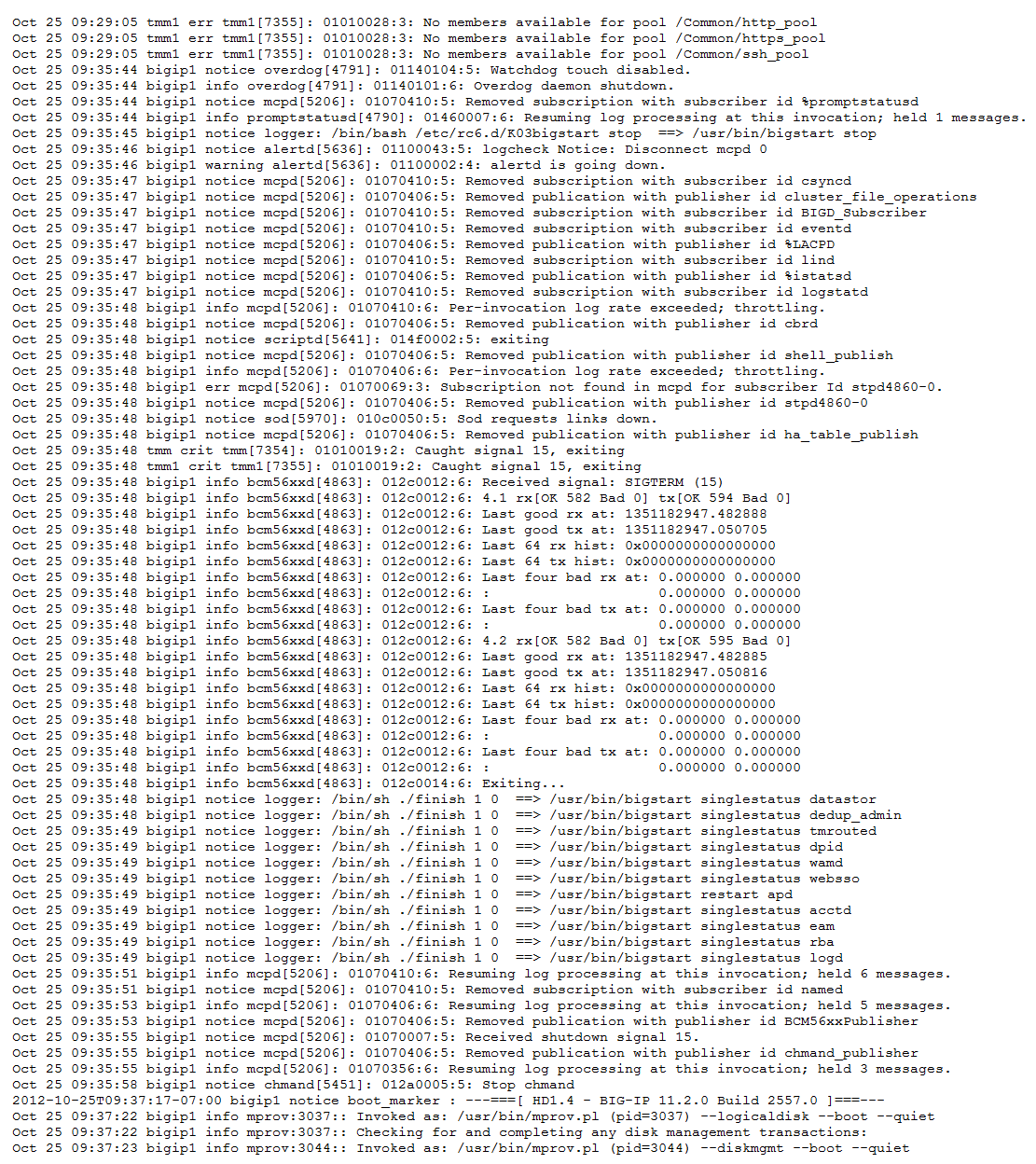 -- Exhibit --
Refer to the exhibits.
An LTM Specialist uses the information in the logs to determine the cause of a failover event in a
high-availability (HA) pair.
What caused the failover?
-- Exhibit --
Refer to the exhibits.
An LTM Specialist uses the information in the logs to determine the cause of a failover event in a
high-availability (HA) pair.
What caused the failover?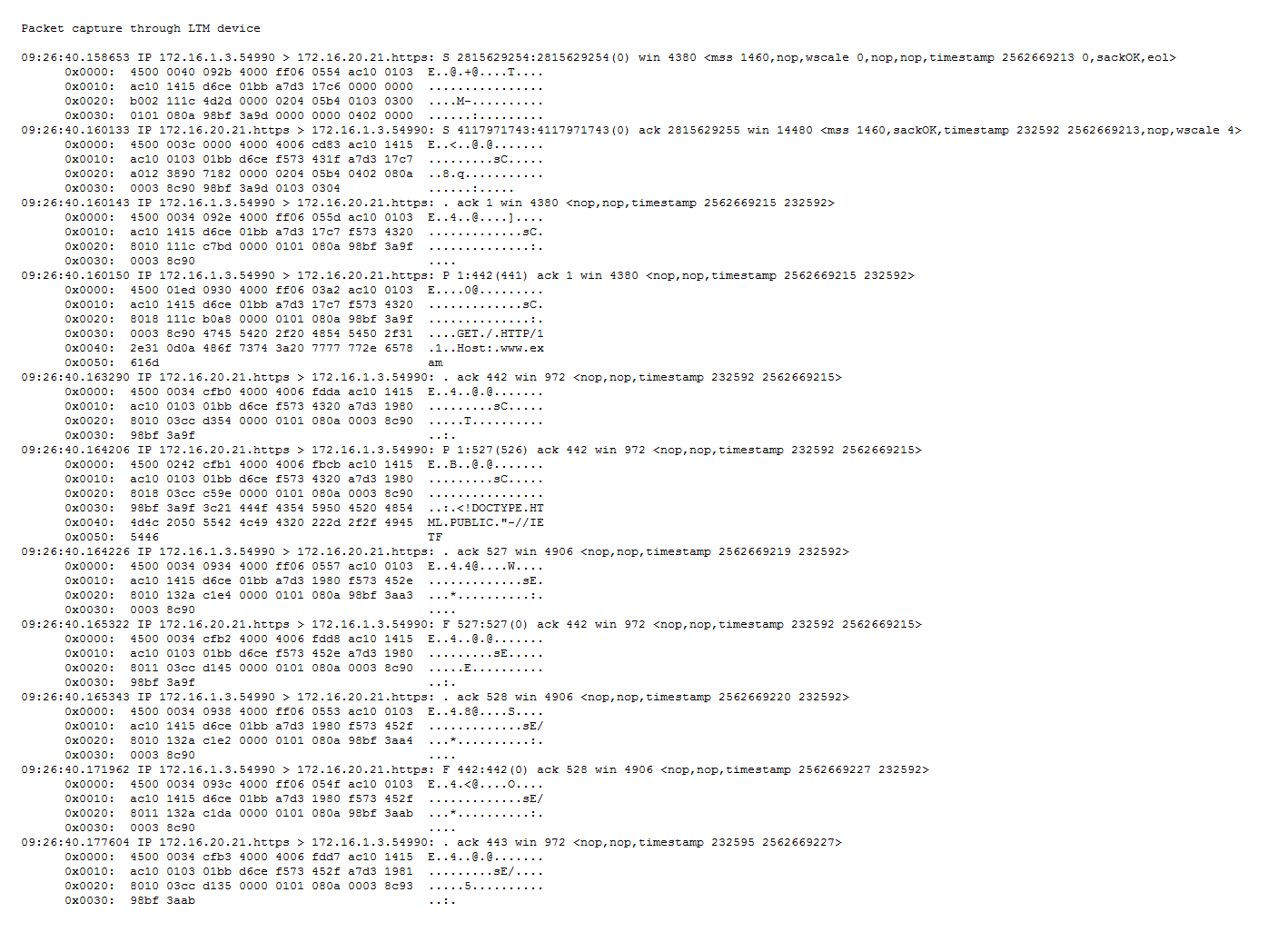
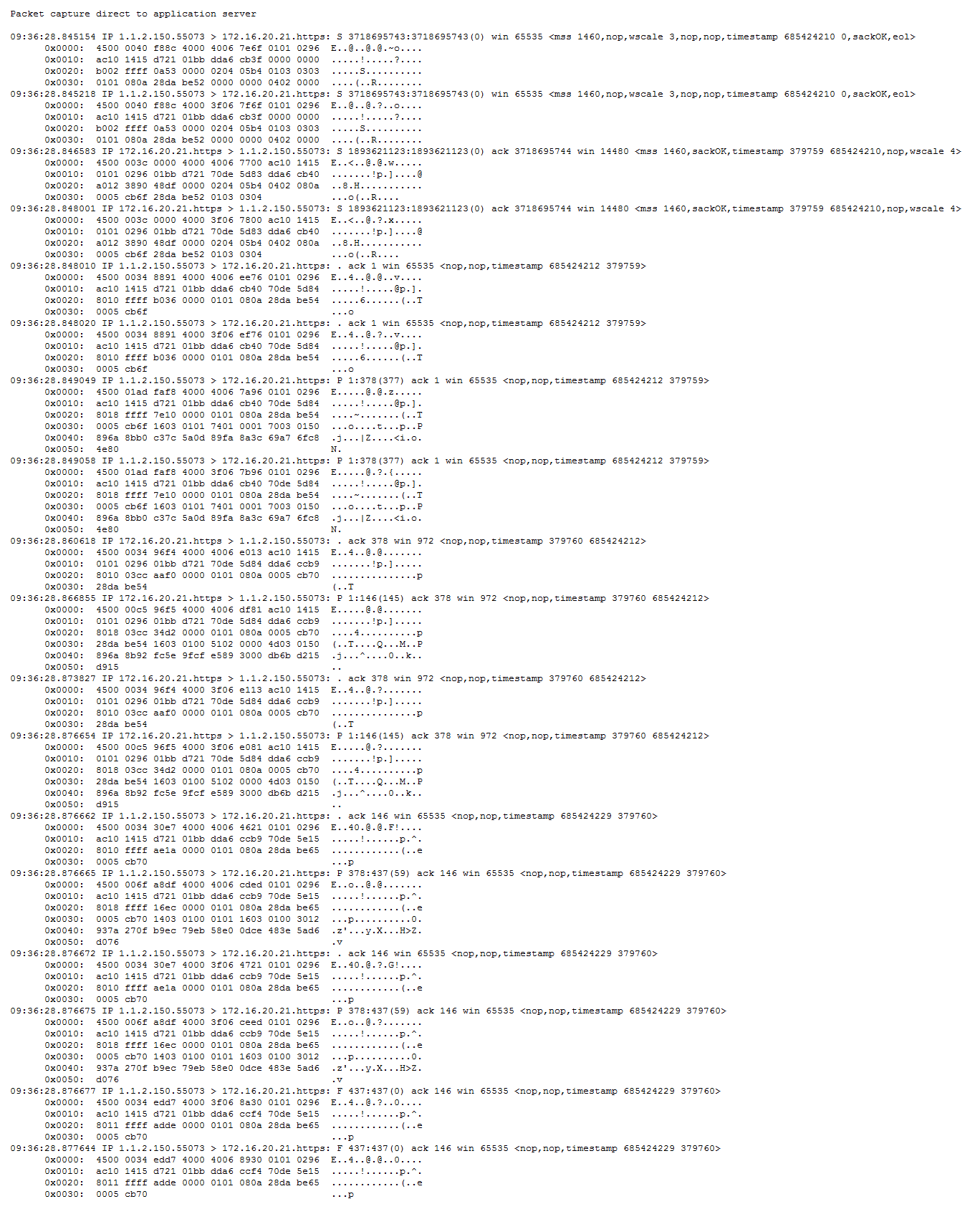 -- Exhibit --
Refer to the exhibits.
An LTM Specialist has configured a virtual server to distribute connections to a pool of application
servers and to offload SSL processing. The application fails to work as expected when connecting to
the virtual server. It does work when clients connect directly to the application. Two packet captures
were taken at the application server.
What is the root cause of the problem?
-- Exhibit --
Refer to the exhibits.
An LTM Specialist has configured a virtual server to distribute connections to a pool of application
servers and to offload SSL processing. The application fails to work as expected when connecting to
the virtual server. It does work when clients connect directly to the application. Two packet captures
were taken at the application server.
What is the root cause of the problem?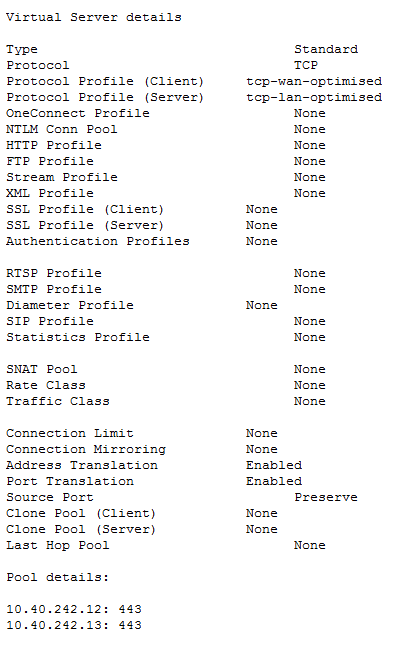 -- Exhibit --
Refer to the exhibit.
An LTM device is used to load balance web content over a secure channel.
The developers of the web content have done a trace using an HTTP profiler application. They
believe that allowing the LTM device to compress traffic to the client will improve performance. The
client can utilize GZIP or deflate compression algorithms.
An LTM Specialist must implement the compression.
The LTM Specialist has completed the following actions:
1. Create the relevant profile.
2. Apply the relevant profile to the virtual server (VS).
After applying the relevant profile, the LTM device is failing to compress the traffic. Instead, the
traffic is being served with an error.
What is the problem?
-- Exhibit --
Refer to the exhibit.
An LTM device is used to load balance web content over a secure channel.
The developers of the web content have done a trace using an HTTP profiler application. They
believe that allowing the LTM device to compress traffic to the client will improve performance. The
client can utilize GZIP or deflate compression algorithms.
An LTM Specialist must implement the compression.
The LTM Specialist has completed the following actions:
1. Create the relevant profile.
2. Apply the relevant profile to the virtual server (VS).
After applying the relevant profile, the LTM device is failing to compress the traffic. Instead, the
traffic is being served with an error.
What is the problem?