
Q: 11
What is the relationship between partition, time schedule, and time period in Time-of-Day routing in
Cisco Unified Communications Manager?
Options
Discussion
Option A is correct here. Partitions can have multiple time schedules, that’s a common trap since some confuse it with only one. Time schedule grouping of time periods matches Cisco docs. Seen this phrasing before, pretty sure about it.
A , but not 100 percent sure. Pretty sure partitions can have multiple time schedules and a time schedule is made up of several time periods, right?
Be respectful. No spam.
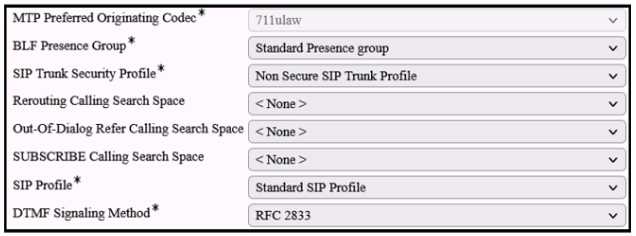 An administrator just Implemented SIP trunking on their Cisco UCM and reports that calls using the
SIP trunk are using Media Termination Point resources unnecessarily. Which action resolves the
issue?
An administrator just Implemented SIP trunking on their Cisco UCM and reports that calls using the
SIP trunk are using Media Termination Point resources unnecessarily. Which action resolves the
issue?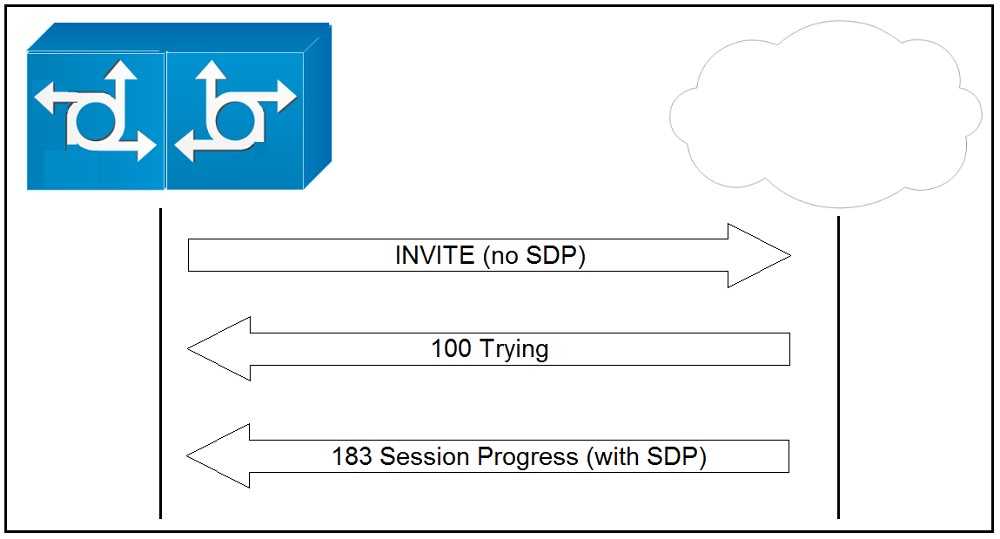 An administrator is troubleshooting why users are not hearing audio when dialing long distance
numbers across their Cisco Unified Border Element. The customer’s carrier has a requirement that
dialing long distance requires an access code to be entered. Looking at the exhibit, what two actions
can be taken to correct signaling? (Choose two.)
An administrator is troubleshooting why users are not hearing audio when dialing long distance
numbers across their Cisco Unified Border Element. The customer’s carrier has a requirement that
dialing long distance requires an access code to be entered. Looking at the exhibit, what two actions
can be taken to correct signaling? (Choose two.)