
Q: 1
Which feature of Cisco SD-WAN Secure Direct Cloud Access divides user traffic into different zones
and VPNs or VRFs?
Options
Discussion
B. but if the question was about traffic routing and not zones/VRFs, D could technically fit.
My vote is it's B, since secure segmentation is what actually creates separate zones or VRFs for user traffic in SD-WAN. Application-aware routing (D) just directs flows by app, doesn't segment like B. Open if anyone disagrees.
B tbh
Probably B. Secure segmentation is what actually splits up traffic into separate zones/VRFs in SD-WAN, not centralized policy (A) or application-aware routing (D). D is just for picking links based on app type, doesn't actually split the topology. Trap for people who mix those up. Pretty sure from similar question on a practice test.
Seen this on some practice exams, official guide also points to B.
B
D or maybe C. Sounds like app-aware could handle it but not totally sure.
B tbh
Maybe D, since application-aware routing could send traffic on different VPNs based on app but not totally sure.
For me, D, since application-awareness routing sounds like it could steer traffic into different VPNs depending on the app requirements. Not 100% though-could be overthinking it and missing something about segmentation. Anyone else see app-aware routing dividing traffic that way?
Be respectful. No spam.
 F48C9ACDC725EA850EC2476EE1E
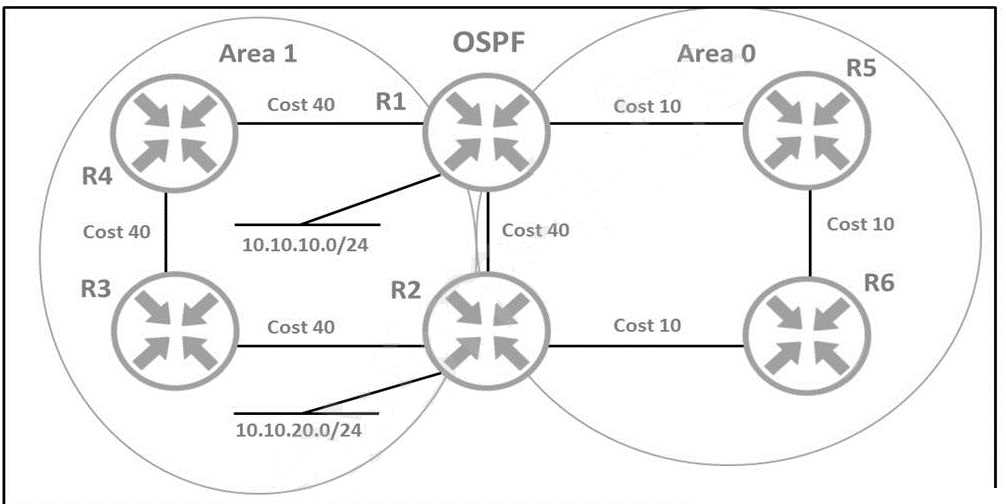
An architect must design a solution that uses the direct link between R1 and R2 for traffic from
10.10.10.0/24
toward network 10.10.20.0/24. Which solution should the architect include in the design?
F48C9ACDC725EA850EC2476EE1E
An architect must design a solution that uses the direct link between R1 and R2 for traffic from
10.10.10.0/24
toward network 10.10.20.0/24. Which solution should the architect include in the design?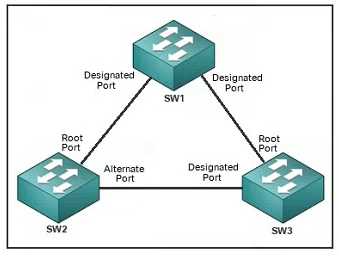 Refer to the exhibit. The connection between SW2 and SW3 is fiber and occasionally experiences
unidirectional link failure. An architect must optimize the network to reduce the change of layer2
forwarding loops when the link fails. Which solution should the architect include?
Refer to the exhibit. The connection between SW2 and SW3 is fiber and occasionally experiences
unidirectional link failure. An architect must optimize the network to reduce the change of layer2
forwarding loops when the link fails. Which solution should the architect include?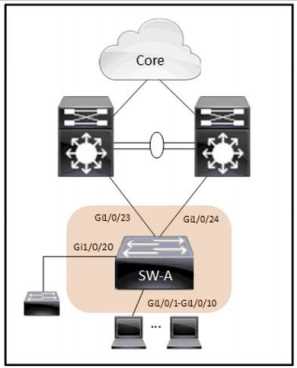 Refer to the exhibit. An architect reviews the low-level design of a company's enterprise network and
advises optimizing the STP convergence time. Which functionality must be to Gi1/0/1-10 to follow
the architect's recommendation?
Refer to the exhibit. An architect reviews the low-level design of a company's enterprise network and
advises optimizing the STP convergence time. Which functionality must be to Gi1/0/1-10 to follow
the architect's recommendation?