
Q: 5
Refer to the exhibit.
 Refer to the exhibit. The connection between SW2 and SW3 is fiber and occasionally experiences
unidirectional link failure. An architect must optimize the network to reduce the change of layer2
forwarding loops when the link fails. Which solution should the architect include?
Refer to the exhibit. The connection between SW2 and SW3 is fiber and occasionally experiences
unidirectional link failure. An architect must optimize the network to reduce the change of layer2
forwarding loops when the link fails. Which solution should the architect include?
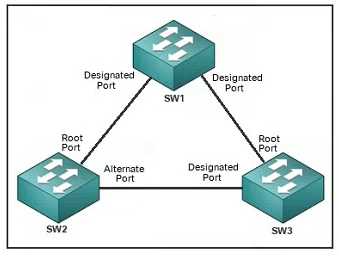 Refer to the exhibit. The connection between SW2 and SW3 is fiber and occasionally experiences
unidirectional link failure. An architect must optimize the network to reduce the change of layer2
forwarding loops when the link fails. Which solution should the architect include?
Refer to the exhibit. The connection between SW2 and SW3 is fiber and occasionally experiences
unidirectional link failure. An architect must optimize the network to reduce the change of layer2
forwarding loops when the link fails. Which solution should the architect include?Options
Discussion
Hard to say, it's B for this one. Loop guard on SW2 is the classic solution for unidirectional link issues and stops L2 loops if BPDUs are lost on fiber. Official guide and practice labs cover this scenario too, worth reviewing those if you want extra confirmation.
If the issue is unidirectional fiber failure, I'd actually pick D. Root guard on SW1 could stop another device from becoming root due to a weird STP state, especially if SW2/3 lose BPDUs one way. Pretty sure, but maybe I'm missing something about SW2 being the better spot?
C BPDU guard is tempting here since it's for loop prevention, but I think that's more about rogue BPDUs than fiber issues.
C. not B. BPDU guard is usually good for stopping loops if a device starts sending BPDUs unexpectedly, especially at the edge. Unidirectional fiber is tricky though.
B , had something like this in a mock and it matched loop guard on SW2.
Loop guard on SW2 helps with these unidirectional fiber failures because it stops ports from going to forwarding if BPDUs are missing. So B fits best here. I've seen the official guides and labs suggest this approach.
Ugh, Cisco loves to test you with these unidirectional fiber scenarios. Probably B, since loop guard on SW2 will actually catch the lack of incoming BPDUs and block the port, which stops the forwarding loop. Root guard (D) is good for rogue root prevention but not really the fix here. Pretty sure that's what official exam guides match too.
I don’t think it’s B. D would be better since root guard on SW1 could prevent another switch from taking over as root, especially if there’s a one-way BPDU loss. That could help avoid unexpected STP changes if the fiber acts up. Pretty sure, but open to being proven wrong.
B tbh, loop guard on SW2 is what you want with unidirectional fiber problems. Root guard (D) is more for keeping the right root bridge and stopping rogue devices, but it won't handle this specific loop risk from link failure. Seen similar questions in practice.
D imo, since root guard on SW1 could help prevent a rogue switch from claiming root and changing the spanning tree. I thought that's useful for stopping certain L2 loops if someone plugs in unexpected gear. Might be missing something specific about fiber unidirectional fails though.
Be respectful. No spam.
