
Q: 4
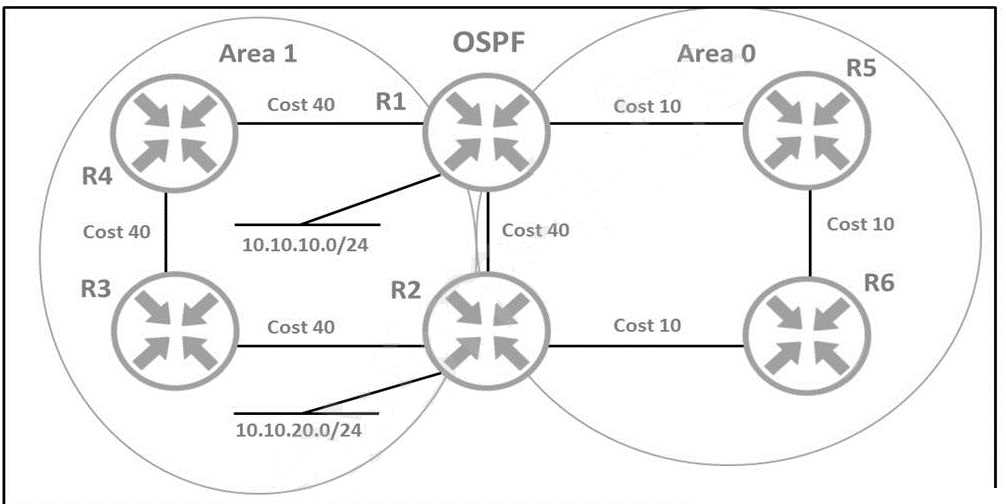
Refer to the exhibit.
C0FD9
 F48C9ACDC725EA850EC2476EE1E
An architect must design a solution that uses the direct link between R1 and R2 for traffic from
10.10.10.0/24
toward network 10.10.20.0/24. Which solution should the architect include in the design?
F48C9ACDC725EA850EC2476EE1E
An architect must design a solution that uses the direct link between R1 and R2 for traffic from
10.10.10.0/24
toward network 10.10.20.0/24. Which solution should the architect include in the design?
 F48C9ACDC725EA850EC2476EE1E
An architect must design a solution that uses the direct link between R1 and R2 for traffic from
10.10.10.0/24
toward network 10.10.20.0/24. Which solution should the architect include in the design?
F48C9ACDC725EA850EC2476EE1E
An architect must design a solution that uses the direct link between R1 and R2 for traffic from
10.10.10.0/24
toward network 10.10.20.0/24. Which solution should the architect include in the design?Options
Discussion
My pick: A. OSPF always prefers the route with the lowest cost, so setting a lower cost on the direct link makes sure it gets used. B is a trap-admin distance isn't per-area in OSPF. Chime in if I'm off here.
Call it A, but that only works if no route summarization or route filtering interferes along the path.
Honestly a bit confused here. Looks like A is right since OSPF uses the lowest cost path, so if you lower the cost on that direct link it'll prefer it over others. Not 100% sure if I'm missing something about multi-area adjacencies but none of the other options seem to fit as well for standard OSPF path selection. Anyone else see it differently?
D . Multiarea adjacency (D) could create a more direct routing path between R1 and R2, assuming the topology supports it. I think it helps in some scenarios, but not 100 percent sure here.
A or maybe D. OSPF cost tweaking (A) is the quick fix since it directly affects path selection, but sometimes I've seen design scenarios in the official guide where multiarea adjacency (D) gets considered for more complex topologies. If you want to be sure, double check the diagrams and compare with the practice labs.
C is a bit much for this scenario. Lowering the OSPF cost on the direct link (A) gets you where you need to be since OSPF chooses lowest-cost paths. Pretty sure that's all they're looking for here.
I don't think B is right, A makes more sense. OSPF doesn't let you adjust admin distance by area, but lowering the cost on the direct link will force OSPF to pick that path. Pretty sure that's what they want here, though open to other readings.
Nah, D is a distractor here-OSPF always uses the lowest cost for path selection. A.
A imo, because the cost metric always wins in OSPF unless there's an odd redistribution scenario.
Be respectful. No spam.
