1. Postel, J. (1981). RFC 792: Internet Control Message Protocol. Internet Engineering Task Force (IETF).
Section: "Time Exceeded Message"
Content: "If the gateway processing a datagram finds the time to live field is zero it must discard the datagram. The gateway may also notify the source host via the time exceeded message." This RFC defines the ICMP message and its direct link to the TTL field reaching zero.
DOI: https://doi.org/10.17487/RFC0792
2. Cisco. (2020). CCNA 200-301 Official Cert Guide, Volume 1. Cisco Press.
Chapter 4: "Fundamentals of IPv4 Addressing and Routing"
Section: "The IP Header"
Content: The guide explains that the TTL field is decremented by each router and is used to prevent routing loops. When the TTL reaches 0, the packet is discarded, and an ICMP Time Exceeded message is sent back to the source. This directly links the message to the prevention of routing loops.
3. Kurose, J. F., & Ross, K. W. (2017). Computer Networking: A Top-Down Approach (7th ed.). Pearson.
Chapter 4: "The Network Layer: Data Plane"
Section 4.4.1: "The Internet Protocol (IP)"
Content: University-level textbooks like this one explicitly state that the TTL field is included in the IP datagram header to ensure that datagrams do not circulate forever in the network. If the TTL field reaches zero, the router must drop the datagram and send an ICMP Time Exceeded message to the source. This is presented as the primary mechanism for handling routing loops.

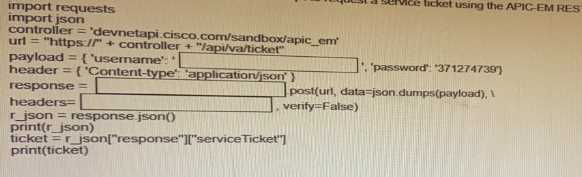
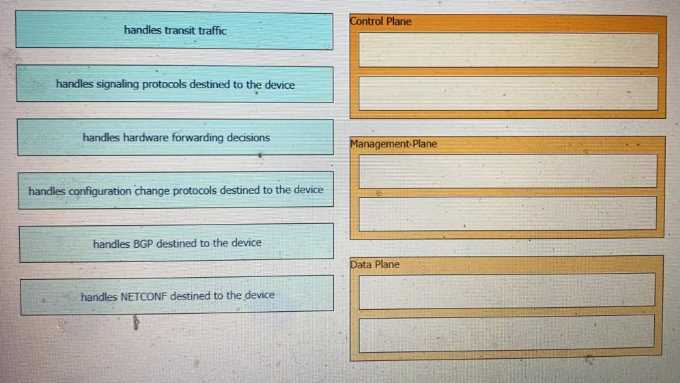
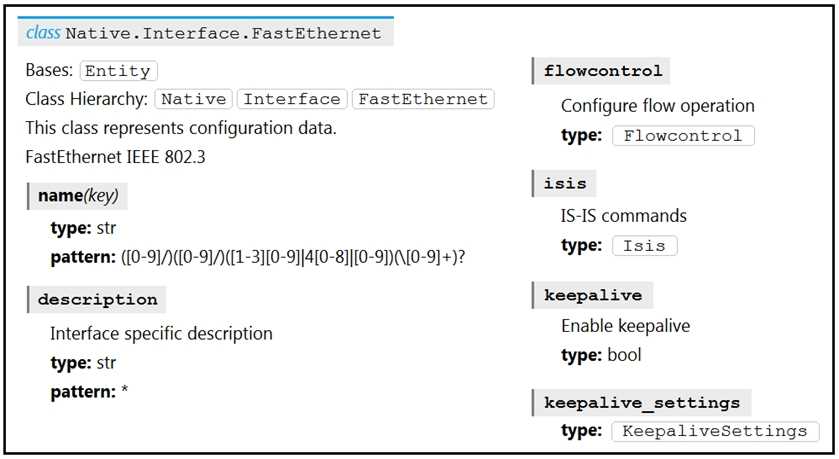 Refer to the exhibit. Drag and drop the code snippets from the bottom to the blanks in the code to enable keepalive for the FastEthernet 2/0 interface. Not all options are used.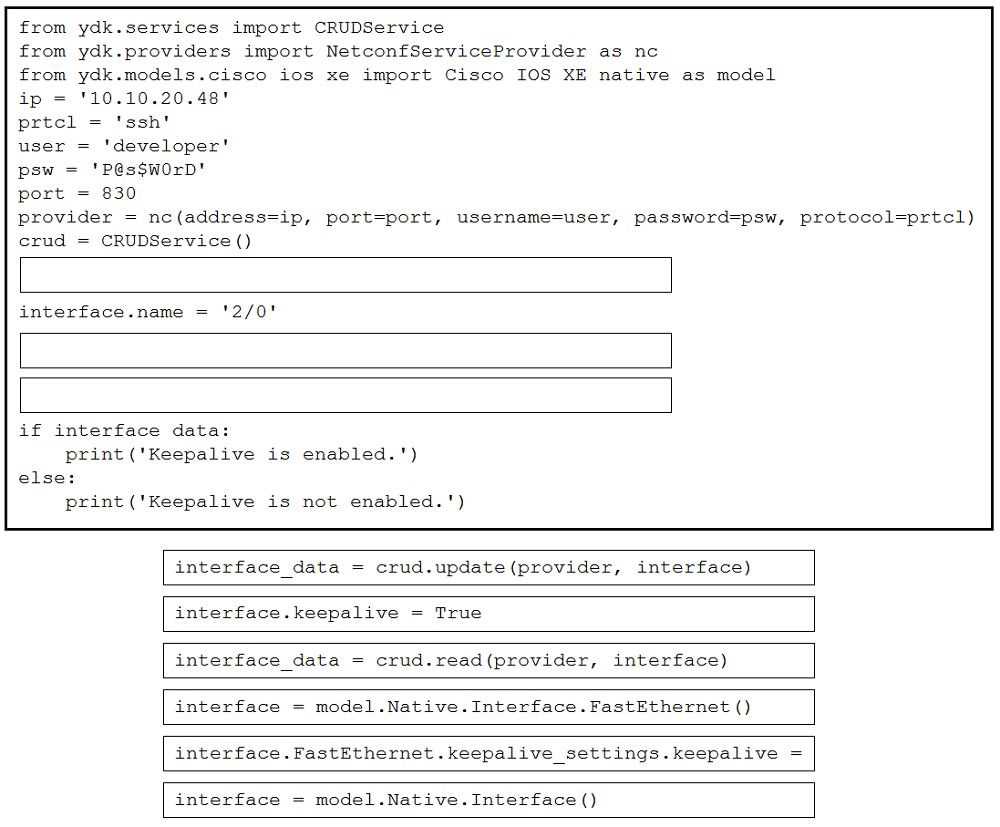
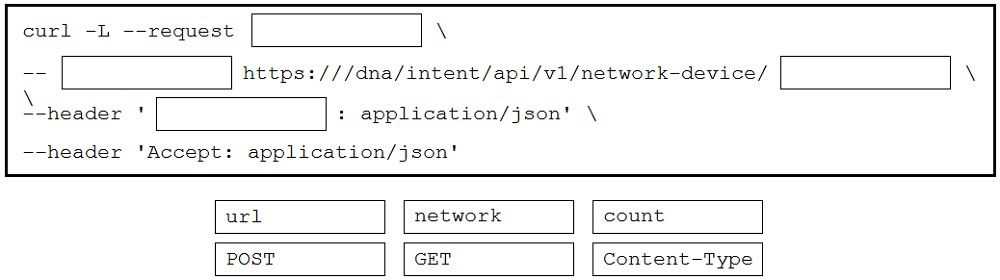
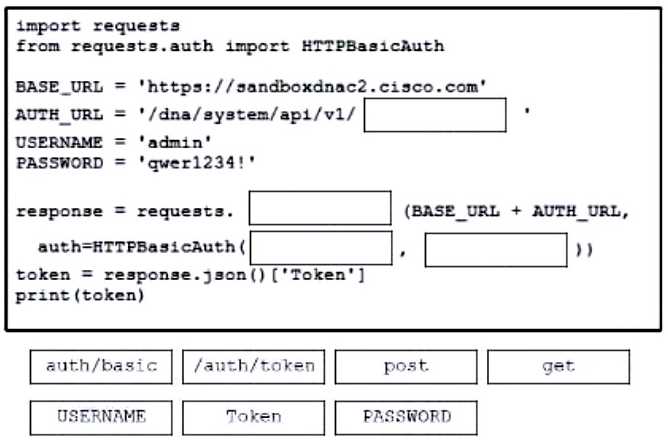
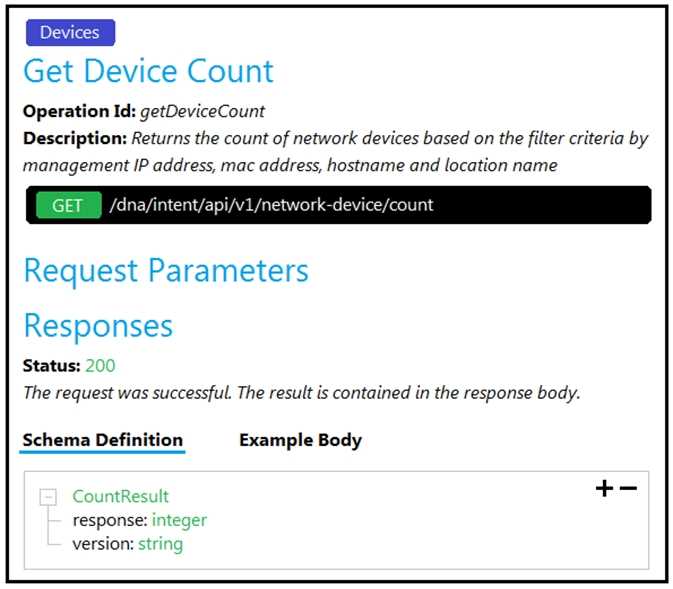 Refer to the exhibit. Drag and drop the code snippets from the bottom onto the blanks in the code to construct a request to find the Cisco DNA Center switch count. Not all options are used.