
I picked C because I thought RST confirmed a segment actually arrived, since it seems like a forced response. But isn't ACK the one for segment confirmation, and RST is more for dropping the session? Not 100% sure on this, open to correction.
Q: 1
What is the difference between the ACK flag and the RST flag in the NetFlow log session?
Options
Discussion
D imo, ACK is always about confirming data receipt but RST is that abrupt drop/close. C trips people up because RST isn't just for confirmation, it's to quickly end sessions. Seen similar Qs in practice.
Be respectful. No spam.
Q: 2
Which attack is the network vulnerable to when a stream cipher like RC4 is used twice with the same
key?
Options
Discussion
Option C makes sense here. With stream ciphers like RC4, reusing the same key means attackers can analyze only ciphertexts to find patterns due to how XOR works. Pretty sure this is the weakness they test for, but let me know if you disagree.
C vs B-if the attacker somehow gets even a tiny known plaintext, doesn't this open up B as well? But with just ciphertext repeated key streams, C seems correct.
C tbh
C If you reuse the same key with a stream cipher like RC4, attackers just need ciphertexts to start spotting XOR patterns, so even without plaintext they can recover info. Seen this called out in a few practice sets.
Be respectful. No spam.
Q: 3
Which step in the incident response process researches an attacking host through logs in a SIEM?
Options
Discussion
Checking SIEM logs to investigate a host happens during detection and analysis. Option A matches what you'd do first after spotting suspicious activity. Saw similar on a practice test, pretty sure it's A.
A tbh. Containment is tempting but the actual log research in SIEM falls under detection and analysis step not D.
Be respectful. No spam.
Q: 4
Which security monitoring data type requires the largest storage space?
Options
Discussion
Option D makes sense because full packet capture stores every bit of network traffic, not just metadata or summaries. Compared to session or transaction data, this takes up way more disk space. I think that's what Cisco wants here, unless they've changed something recently. Open to correction if anyone has seen otherwise.
D imo, similar question popped up in my exam practice and full packet capture always eats storage the fastest.
Ugh, Cisco loves asking this. It's D, full packet capture needs huge storage compared to stats or sessions. Pretty sure that's what they're looking for here.
D tbh, full packet capture always takes up more space than the others.
Its D, full packet capture. Official guide and labs both hammer this point home.
Be respectful. No spam.
Q: 5
Which security technology allows only a set of pre-approved applications to run on a system?
Options
Discussion
C imo. Whitelisting only lets approved apps run, so this matches the question exactly. Anyone go with something else?
Probably C here. Application-level whitelisting only lets authorized applications run, blocking everything else automatically. It's more restrictive than blacklisting since it denies by default unless something is explicitly allowed. I remember this from the official guide and some labs. Pretty sure that's what they're asking for, but happy to hear if anyone disagrees.
Be respectful. No spam.
Q: 6
What makes HTTPS traffic difficult to monitor?
Options
Discussion
Hmm, I'd go with A here. SSL interception actually makes it harder to monitor because it complicates the analysis process and can even break things if not set up correctly. Maybe I'm missing something but this seems right to me, unless others see it different.
Its D, encryption is the main thing that makes HTTPS traffic so tough to inspect. Without breaking SSL/TLS, you can't really see inside the payload. Pretty sure that's what Cisco wants here. If someone disagrees let me know.
D
Be respectful. No spam.
Q: 7
Refer to the exhibit.
Which kind of attack method is depicted in this string?
Which kind of attack method is depicted in this string?Options
Discussion
Saw something exactly like this in a practice exam, it's A.
Option C for me. That string looks like it's trying to send something to the backend, almost like it's manipulating a database if you mess with it. Maybe I'm off, but this feels more SQL injection than anything else.
A
Be respectful. No spam.
Q: 8
Refer to the exhibit.
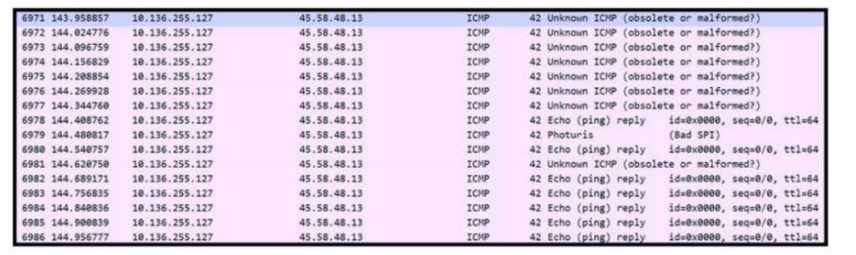
Refer to the exhibit. An engineer received a ticket to analyze unusual network traffic. What is
occurring?
Refer to the exhibit. An engineer received a ticket to analyze unusual network traffic. What is
occurring?Options
Discussion
B tbh
Be respectful. No spam.
Q: 9
Refer to the exhibit.
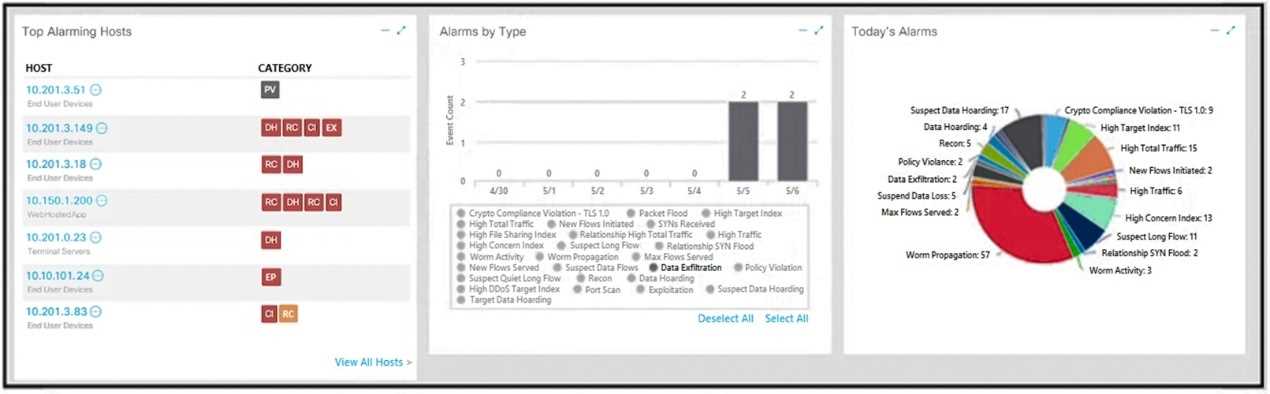
What is the potential threat identified in this Stealthwatch dashboard?
What is the potential threat identified in this Stealthwatch dashboard?Options
Discussion
C for sure. Official Cisco guides and lab walkthroughs both point to data exfiltration showing up strong in these Stealthwatch questions.
I don’t think it’s D, it’s actually C. The Stealthwatch dashboard clearly lists two active data exfiltration alerts, which stands out more than just a policy violation. Trap is picking the host-specific violations, but exfil alert is the bigger risk.
Its C, saw a similar question show two active data exfiltration alerts in the dashboard. Pretty common on Stealthwatch reports.
Be respectful. No spam.
Question 1 of 20 · Page 1 / 2
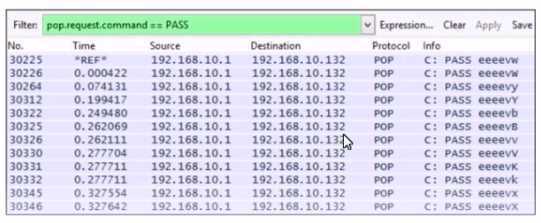
Which alert is identified from this packet capture?
