
Q: 10
Examine this query and its output:
 Which two statements are true?
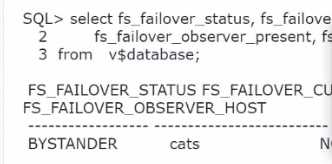 Which two statements are true?
Options
Discussion
D and E imo
D/E, not C. 'Bystander' is a classic trap, since it means it's just watching but not part of failover. Similar question popped up in practice and these were correct.
B or C for me. If FS_FAILOVER_OBSERVER_HOST says 'ol7.example.com', that usually means the observer is running there or supposed to be. Not sure if I'm missing something with the bystander status, but that's how I've seen it in practice. Open to corrections.
Oracle loves to confuse everyone with observer questions, it's D and E.
D and E tbh. The BYSTANDER status is a giveaway that it's not the primary or the failover target, so D fits. E works because just seeing a host listed for the observer doesn't mean it's actually connected-classic trap in these types of questions. Pretty sure about both but happy to be challenged if someone thinks C is stronger.
D and E are correct here. 'Bystander' in Data Guard means the database isn't a failover target, which rules out some trap answers. Also, because we don't see clear evidence the observer is connected, E fits. B and C mix up whether the observer is active vs intended location. Pretty sure that's what Oracle wants in this situation.
Yeah, D and E. Bystander means it's not part of failover, and there's nothing in the output that shows the observer is actually connected. Pretty sure that's what they're looking for here.
D and E. Bystander status plus no proof observer is actually running or connected, right?
Why does Oracle always make this so messy? C.
D and E imo
Be respectful. No spam.
