Free PCNSE Practice Test Questions and Answers (2026)

View Mode
Q: 1
Which action does a firewall take when a decryption profile allows unsupported modes and unsupported traffic with TLS 1.2 protocol traverses the firewall?
Options
Q: 2
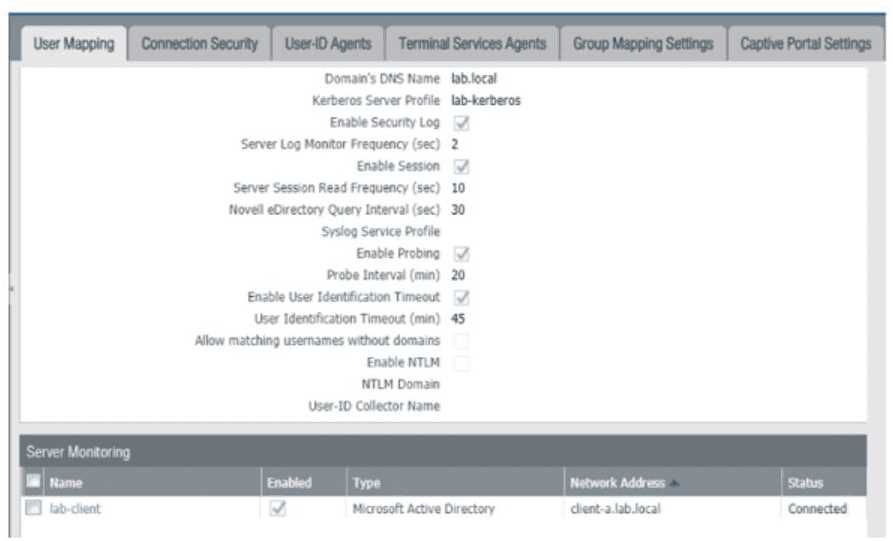
Based on the graphic which statement accurately describes the output shown in the Server Monitoring panel? PaloAlto PCNSE question
Options
Q: 3
Which three methods are supported for split tunneling in the GlobalProtect Gateway? (Choose three.)
Options
Q: 4

A network security engineer needs to ensure that virtual systems can communicate with one another within a Palo Alto Networks firewall. Separate virtual routers (VRs) are created for each virtual system. In addition to confirming security policies, which three configuration details should the engineer focus on to ensure communication between virtual systems? (Choose three)

Options
Q: 5

‘SSL Forward Proxy decryption is configured, but the firewall uses Untrusted-CA to sign the website https://www important-website com certificate, End-users are receiving the "security certificate is no: trusted” warning, Without SSL decryption, the web browser shows chat the website certificate is trusted and signet by well-known certificate chain Well-Known-intermediate and Wako Hebe CA Security administrator who represents the customer requires the following two behaviors when SSL Forward Proxy is enabled: 1. End-users must not get the warning for the https:///www.very-import-website.com/ website. 2. End-users should get the warning for any other untrusted website. Which approach meets the two customer requirements?


Options
Q: 6
Which new PAN-OS 11.0 feature supports IPv6 traffic?
Options
Q: 7
Which three options does Panorama offer for deploying dynamic updates to its managed devices? (Choose three.)
Options
Q: 8
A network security administrator wants to inspect HTTPS traffic from users as it egresses through a firewall to the Internet/Untrust zone from trusted network zones. The security admin wishes to ensure that if users are presented with invalid or untrusted security certificates, the user will see an untrusted certificate warning. What is the best choice for an SSL Forward Untrust certificate?
Options
Q: 9
An administrator plans to install the Windows-Based User-ID Agent. What type of Active Directory (AD) service account should the administrator use?
Options
Q: 10

A network engineer has discovered that asymmetric routing is causing a Palo Alto Networks firewall to drop traffic. The network architecture cannot be changed to correct this. Which two actions can be taken on the firewall to allow the dropped traffic permanently? (Choose two.)

Options
Q: 11

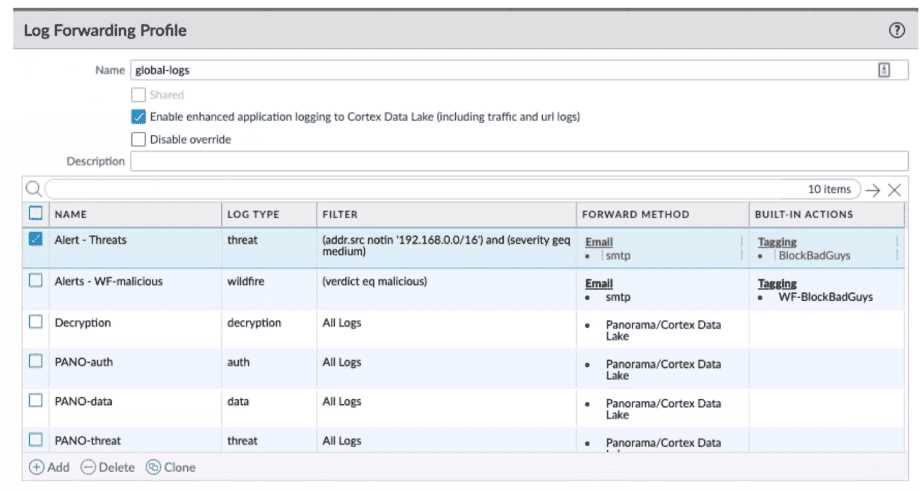
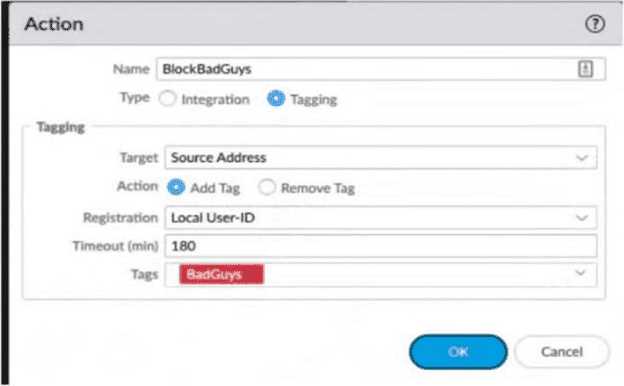
PaloAlto PCNSE question PaloAlto PCNSE question Review the images. A firewall policy that permits web traffic includes the global-logs policy is depicted What is the result of traffic that matches the "Alert - Threats" Profile Match List?

Options
Q: 12
What happens when an A/P firewall pair synchronizes IPsec tunnel security associations (SAs)?
Options
Q: 13
As a best practice, logging at session start should be used in which case?
Options
Q: 14
When you troubleshoot an SSL Decryption issue, which PAN-OS CL1 command do you use to check the details of the Forward Trust certificate. Forward Untrust certificate, and SSL Inbound Inspection certificate?
Options
Q: 15
Which GlobalProtect gateway selling is required to enable split-tunneling by access route, destination domain, and application?
Options
Q: 16
An engineer needs to permit XML API access to a firewall for automation on a network segment that is routed through a Layer 3 sub-interface on a Palo Alto Networks firewall. However, this network segment cannot access the dedicated management interface due to the Security policy. Without changing the existing access to the management interface, how can the engineer fulfill this request?
Options
Q: 17
An organization is interested in migrating from their existing web proxy architecture to the Web Proxy feature of their PAN-OS 11.0 firewalls. Currently. HTTP and SSL requests contain the c IP address of the web server and the client browser is redirected to the proxy Which PAN-OS proxy method should be configured to maintain this type of traffic flow?
Options
Q: 18
Which User-ID mapping method should be used in a high-security environment where all IP address- to-user mappings should always be explicitly known?
Options
Q: 19
An engineer creates a set of rules in a Device Group (Panorama) to permit traffic to various services for a specific LDAP user group. What needs to be configured to ensure Panorama can retrieve user and group information for use in these rules?
Options
Q: 20
A network administrator is troubleshooting an issue with Phase 2 of an IPSec VPN tunnel The administrator determines that the lifetime needs to be changed to match the peer. Where should this change be made?
Options
Question 1 of 20

What's covered in this practice questions set

4: Configure and Troubleshoot · 7 questions

📖 About this Domain

This domain covers the practical implementation and operational troubleshooting of Palo Alto Networks Next-Generation Firewalls. It tests your ability to identify and resolve issues within the PAN-OS architecture. Core concepts include traffic flow analysis, system health diagnostics, and resolving policy enforcement problems.

🎓 What You Will Learn

  • You will learn to troubleshoot traffic flow using tools like packet captures, session browser, and traffic logs to identify policy or NAT issues.
  • You will learn to diagnose system health, including high availability (HA) states, resource utilization, and management plane responsiveness.
  • You will learn to resolve issues with User-ID agent connectivity and user-to-IP address mapping for policy enforcement.
  • You will learn to validate and troubleshoot security profile actions, including WildFire analysis verdicts and URL filtering categorization.

🛠️ Skills You Will Build

  • You will build proficiency in using PAN-OS CLI commands to debug the dataplane packet flow and inspect session details.
  • You will build the ability to analyze system, traffic, and threat logs to isolate the root cause of network and security incidents.
  • You will build skills to troubleshoot HA synchronization, link monitoring, and path monitoring to ensure seamless failover.
  • You will build competence in resolving GlobalProtect connectivity issues related to portal, gateway, and agent configurations.

💡 Top Tips to Prepare

  • Master the packet flow logic and the 'show session id' command to trace how a packet is processed by the dataplane.
  • Practice troubleshooting common misconfigurations in a lab environment, focusing on security policies, NAT, and routing.
  • Understand how to interpret the output of key CLI debug commands for dataplane and management plane processes.
  • Familiarize yourself with the ACC and log viewer to quickly identify anomalies in traffic patterns and threat activity.

2: Deploy and Configure · 6 questions

📖 About this Domain

This domain focuses on the initial configuration and deployment of a PAN-OS firewall. It covers core components required to get the device operational on a network, including interfaces, routing, and foundational policies. You will learn to integrate the firewall into various network topologies.

🎓 What You Will Learn

  • Configure and manage different interface types such as Layer 2, Layer 3, Virtual Wire, and Aggregate Ethernet (AE).
  • Implement virtual routers with static routes and dynamic routing protocols like OSPF and BGP for network pathing.
  • Create and manage Security policy rules using App-ID to control traffic flow between security zones.
  • Deploy Network Address Translation (NAT) policies, including Source NAT and Destination NAT, to manage IP address translation.

🛠️ Skills You Will Build

  • Ability to perform initial firewall setup, including management interface configuration and software updates.
  • Proficiency in configuring High Availability (HA) in both Active/Passive and Active/Active modes for network redundancy.
  • Skill in creating a foundational security rulebase that effectively segments the network using zones and policies.
  • Competence in integrating the firewall into complex network environments using advanced routing and interface configurations.

💡 Top Tips to Prepare

  • Master the packet processing logic to understand how traffic flows through NAT, Security, and PBF policies.
  • Gain hands-on experience with the CLI for initial configuration and operational commands, not just the web UI.
  • Understand the specific use cases and configuration differences between Tap, V-Wire, L2, and L3 deployment modes.
  • Review the requirements for HA configuration, including HA link types, path monitoring, and failover triggers.

3: Operate · 4 questions

📖 About this Domain

The Operate domain covers the day-to-day administration, monitoring, and maintenance of PAN-OS firewalls. It focuses on interpreting logs, generating reports, and managing system health. Key topics include the Application Command Center (ACC), High Availability (HA) operations, and software update procedures.

🎓 What You Will Learn

  • How to interpret various log types, including Traffic, Threat, and URL Filtering, for security event analysis.
  • How to use the ACC and reporting features to gain visibility into network traffic and potential threats.
  • How to manage and troubleshoot High Availability (HA) clusters, including failover triggers and link monitoring.
  • The correct procedures for performing PAN-OS software upgrades and installing dynamic content updates.

🛠️ Skills You Will Build

  • Ability to investigate security incidents by correlating data from firewall logs and the ACC.
  • Proficiency in monitoring firewall resource utilization, including management plane and dataplane CPU.
  • Competence in performing critical maintenance tasks like configuration backups, license management, and software updates.
  • Skills to diagnose HA state, synchronization issues, and failover problems using both the GUI and CLI.

💡 Top Tips to Prepare

  • Master log filtering in the Monitor tab to quickly isolate traffic for troubleshooting and analysis.
  • Understand how ACC widgets correlate to underlying log data for rapid identification of network anomalies.
  • Practice essential CLI commands for verifying HA status, such as 'show high-availability state'.
  • Memorize the recommended PAN-OS upgrade path and the steps for pre- and post-upgrade verification.

1: Plan · 3 questions

📖 About this Domain

This domain covers the foundational planning and design principles of the Palo Alto Networks security platform. It focuses on identifying the correct components and architectural considerations for a given environment. You will learn to map security requirements to platform capabilities before deployment.

🎓 What You Will Learn

  • Identify the function and integration of core components like NGFW, Panorama, Prisma Access, and Cortex XDR.
  • Determine design considerations for deploying the security platform in diverse network and cloud environments.
  • Understand the procedures for licensing, subscriptions, and retrieving dynamic content updates like App-ID and Threat Prevention.
  • Grasp the concepts of the Single-Pass Parallel Processing (SP3) architecture and the Zero Trust security model.

🛠️ Skills You Will Build

  • Plan a deployment by selecting appropriate platform components for specific security use cases.
  • Architect High Availability (HA) solutions by identifying requirements for active/passive and active/active clusters.
  • Design security policy logic using App-ID, User-ID, and Content-ID to enforce Zero Trust principles.
  • Integrate Palo Alto Networks solutions into public cloud environments like AWS, Azure, and GCP.

💡 Top Tips to Prepare

  • Memorize the data flow and packet processing logic of the SP3 architecture.
  • Review the official PCNSE Study Guide to understand the specific objectives for the Plan domain.
  • Focus on design scenarios that require choosing between different NGFW form factors, Panorama modes, and HA configurations.
  • Understand the purpose of each subscription service and how it maps to a specific threat vector.

Premium Access Includes

  • Quiz Simulator
  • Exam Mode
  • Progress Tracking
  • Question Saving
  • Flash Cards
  • Drag & Drops
  • 3 Months Access
  • PDF Downloads
Get Premium Access
Scroll to Top

FLASH OFFER

Days
Hours
Minutes
Seconds

avail 10% DISCOUNT on YOUR PURCHASE