IIA IIA CIA PART2
Q: 1
Which of the following internal audit procedures commonly involves sampling?
Options
Q: 2
After completing an assurance engagement, the chief audit executive (CAE) concludes that
management has accepted a level of risk that may be unacceptable to the
organization. What is the most appropriate first step for the CAE to take?
Options
Q: 3
According to IIA guidance, which of the following statements is true regarding audit workpapers?
Options
Q: 4
The internal audit activity is currently working on several engagements, including a consulting
engagement on the management process in the human resources department. Which of the
following actions should the chief audit executive take to most efficiently and effectively ensure the
quality of the engagement?
Options
Q: 5
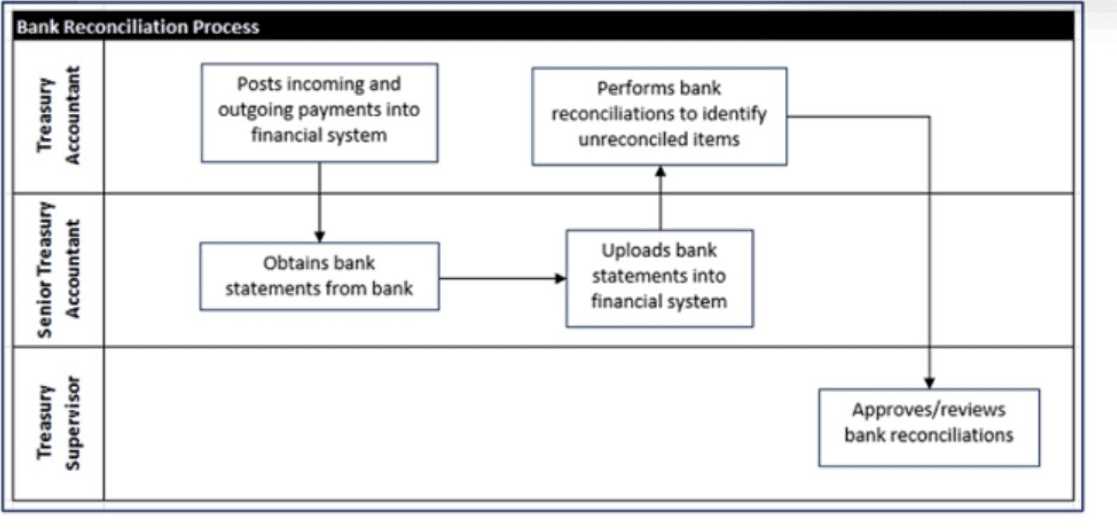
Below is a flowchart detailing an organization's bank reconciliation process. Which of the following
conclusions can be drawn from the flowchart?


Options
Q: 6
Upon completing a follow-up audit engagement, the chief audit executive (CAE) noted that
management has not implemented any mitigation measures to address the high
risks that were reported in the initial audit report. What initial step must the CAE take to address this
situation?
Options
Q: 7
Which of the following is most likely the subject of a periodic report from the chief audit executive to
the board?
Options
Q: 8
The internal audit activity has requested that new vendor information be summarized once per week
in a single report, and that all invoices each week for these vendors be automatically flagged in the
invoice processing system. Which of the following computerized audit techniques is the internal
audit activity most likely applying?
Options
Q: 9
During an audit of suspense accounts the internal auditor found that there were no written policies
on how suspense accounts should be treated. The auditor also found that suspense account balances
were cleared once per week, not daily. Which of the following is the most appropriate first response
by the auditor?
Options
Q: 10
An organization's healthcare insurance costs have been rising approximately 10 percent per year for
several years. Which of the following analytical review procedures would best evaluate the
reasonableness of the increase in healthcare costs?
Options
Question 1 of 10