
Q: 1
A set of servers is used for an FTP application as well as an HTTP website via separate BIG-IP Pools.
The
server support team reports that some servers are receiving a lot more traffic than others.
Which Load Balancing Method should the BIG-IP Administrator apply to even out the connection
count?
Options
Discussion
No comments yet. Be the first to comment.
Be respectful. No spam.
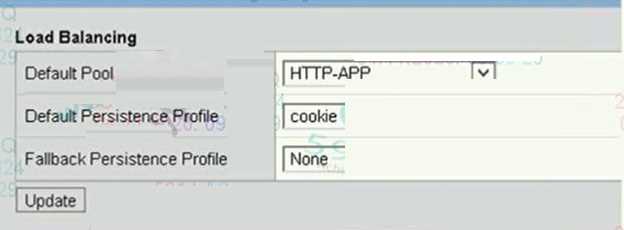 Due to a change in application requirements, a BIG-IP Administrator needs to modify the
configuration of a Virtual Server to include a Fallback Persistence Profile.
Which persistence profile type should the BIG-IP Administrator use for this purpose?
Due to a change in application requirements, a BIG-IP Administrator needs to modify the
configuration of a Virtual Server to include a Fallback Persistence Profile.
Which persistence profile type should the BIG-IP Administrator use for this purpose?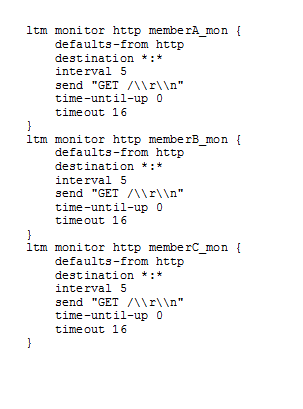
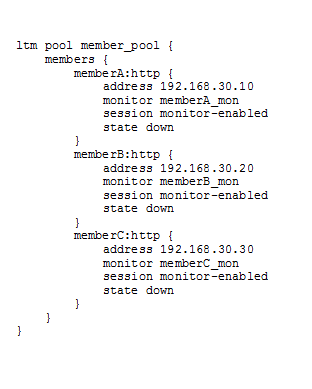 -- Exhibit --
Refer to the exhibits.
How should the LTM Specialist minimize the configuration?
-- Exhibit --
Refer to the exhibits.
How should the LTM Specialist minimize the configuration?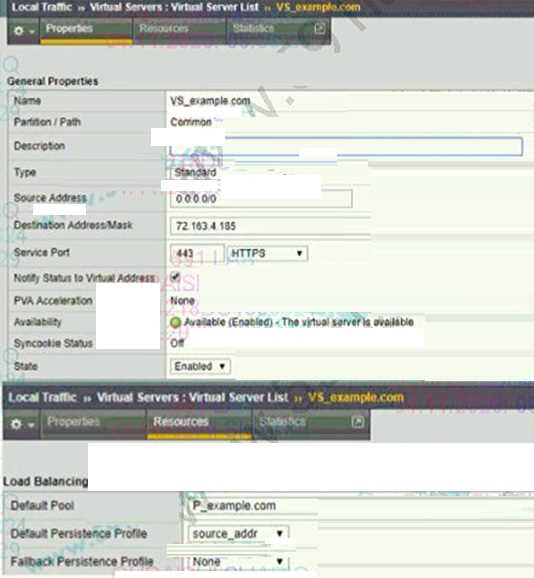 An organization is reporting slow performance accessing their Intranet website, hosted in a public
cloud. All employees use a single Proxy Server with the public IP of 104.219.110.168 to connect to
the Internet. What should the BIG-IP Administrator of the Intranet website do to fix this issue?
An organization is reporting slow performance accessing their Intranet website, hosted in a public
cloud. All employees use a single Proxy Server with the public IP of 104.219.110.168 to connect to
the Internet. What should the BIG-IP Administrator of the Intranet website do to fix this issue?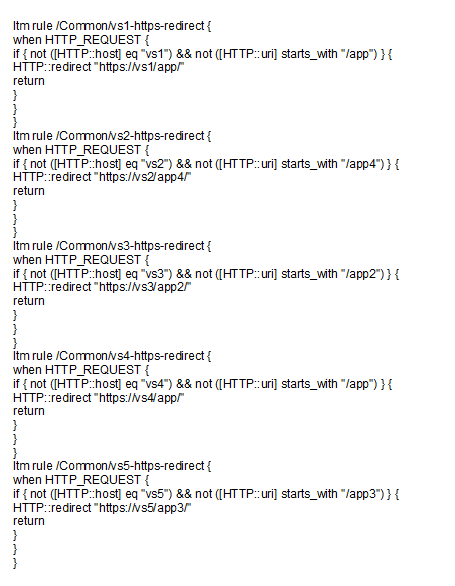 Which two items can be consolidated to simplify the LTM configuration? (Choose two.)
 Which step should an LTM Specialist take next to finish upgrading to HD1.3?
 -- Exhibit --
Refer to the exhibits.
An LTM Specialist has configured a virtual server to distribute connections to a pool of application
servers and to offload SSL processing. The application fails to work as expected when connecting to
the virtual server. It does work when clients connect directly to the application. Two packet captures
were taken at the application server.
What is the root cause of the problem?
-- Exhibit --
Refer to the exhibits.
An LTM Specialist has configured a virtual server to distribute connections to a pool of application
servers and to offload SSL processing. The application fails to work as expected when connecting to
the virtual server. It does work when clients connect directly to the application. Two packet captures
were taken at the application server.
What is the root cause of the problem? A client attempts to connect from a Google Chrome browser to a virtual server on a BIG-IP LTM. The
virtual server is SSL Offloaded. When the client connects, the client receives an SSL error. After trying
Mozilla Firefox and Internet Explorer browsers, the client still receives the same errors.
The LTM Specialist does an ssldump on the virtual server and receives the results as per the exhibit.
What is the problem?
A client attempts to connect from a Google Chrome browser to a virtual server on a BIG-IP LTM. The
virtual server is SSL Offloaded. When the client connects, the client receives an SSL error. After trying
Mozilla Firefox and Internet Explorer browsers, the client still receives the same errors.
The LTM Specialist does an ssldump on the virtual server and receives the results as per the exhibit.
What is the problem? -- Exhibit --
Refer to the exhibit.
An LTM device is used to load balance web content over a secure channel.
The developers of the web content have done a trace using an HTTP profiler application. They
believe that allowing the LTM device to compress traffic to the client will improve performance. The
client can utilize GZIP or deflate compression algorithms.
An LTM Specialist must implement the compression.
The LTM Specialist has completed the following actions:
1. Create the relevant profile.
2. Apply the relevant profile to the virtual server (VS).
After applying the relevant profile, the LTM device is failing to compress the traffic. Instead, the
traffic is being served with an error.
What is the problem?
-- Exhibit --
Refer to the exhibit.
An LTM device is used to load balance web content over a secure channel.
The developers of the web content have done a trace using an HTTP profiler application. They
believe that allowing the LTM device to compress traffic to the client will improve performance. The
client can utilize GZIP or deflate compression algorithms.
An LTM Specialist must implement the compression.
The LTM Specialist has completed the following actions:
1. Create the relevant profile.
2. Apply the relevant profile to the virtual server (VS).
After applying the relevant profile, the LTM device is failing to compress the traffic. Instead, the
traffic is being served with an error.
What is the problem?