Free Palo Alto Networks NetSec-Analyst Practice Test Questions and Answers (2026)

Strengthen your preparation for the Palo Alto Networks NetSec-Analyst exam with trusted 2026 practice resources and study material.

Cert Empire offers accurate and updated Palo Alto Networks NetSec-Analyst exam questions aimed at professionals pursuing advanced network security expertise. Our materials reflect real exam environments and comply with the latest objectives. To make preparation seamless, part of our Palo Alto Networks NetSec-Analyst content is freely accessible. You can practice with the NetSec-Analyst practice test anytime to enhance readiness and confidence before your official attempt.

View Mode
Q: 1

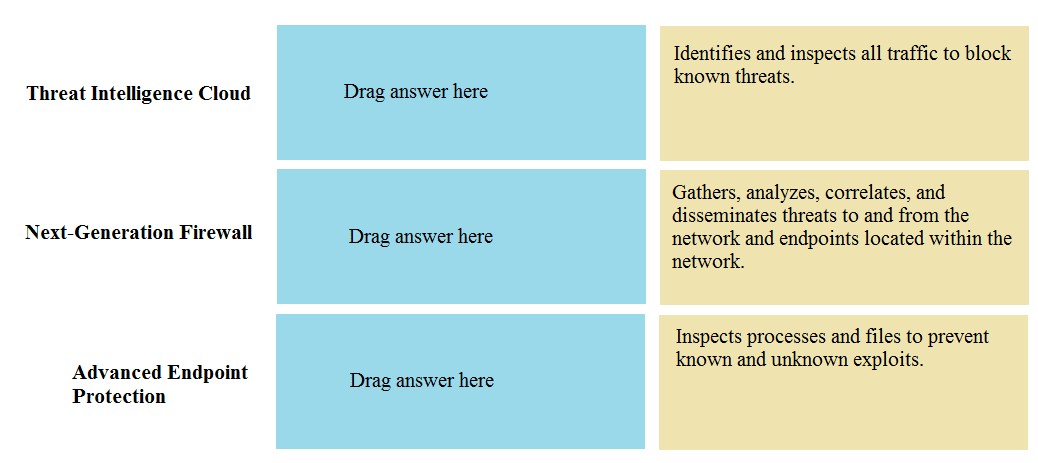
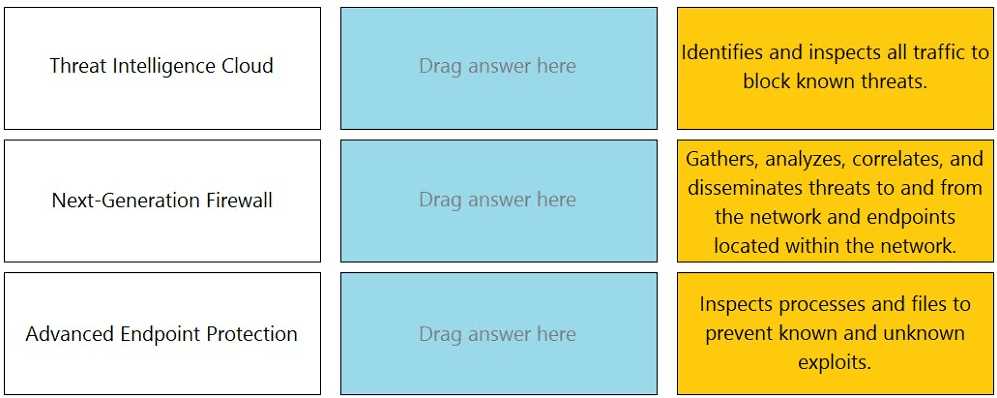
DRAG DROP Match the Palo Alto Networks Security Operating Platform architecture to its description. NetSec Analyst question

Drag & Drop
11 comments in the community discussion
5
Firewall blocks traffic, Threat Intelligence Cloud does the analysis, Advanced Endpoint Protection handles files and processes. Confident but open to other takes.
3
Not seeing it the same way, I think: Next-Generation Firewall → Identifies and inspects all traffic to block known threats, Threat Intelligence Cloud → Gathers, analyzes, correlates, and disseminates threats, Advanced Endpoint Protection → Inspects processes and files to prevent exploits. Some folks might mix up firewa
Q: 2

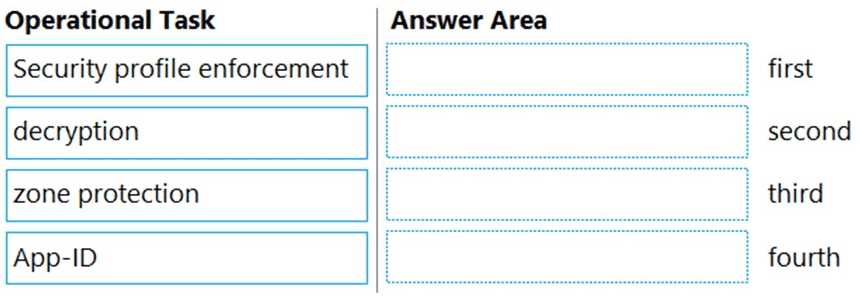
DRAG DROP Place the steps in the correct packet-processing order of operations. NetSec Analyst question

Drag & Drop
9 comments in the community discussion
3
Got zone protection first, then decryption, after that App-ID, and finally security profile enforcement.
2
Option B
Q: 3
Which two statements are correct about App-ID content updates? (Choose two.)
Options
14 comments in the community discussion
1
BI don’t think it’s A here. App-ID is for identifying applications, not devices. Device-ID does the device discovery/classification, which is what IoT security profiles need. Sometimes easy to mix them up because both are core Palo Alto features! Pretty sure B is correct but open to other thoughts if I missed s
1
Similar question came up in a practice exam, it's B. Check the official guide if you want to double-check.
Q: 4
Which object would an administrator create to block access to all high-risk applications?
Options
12 comments in the community discussion
Probably B since application filter will catch all current and future high-risk apps by risk attribute, so you don't have to update anything manually. Official guides and some practice exams mention this being the easiest way when blocking a whole risk category. Not 100% but that's what I'd pick from experience.
B tbh. Application filter is the one that grabs all high-risk apps dynamically, perfect for this use case.
Q: 5
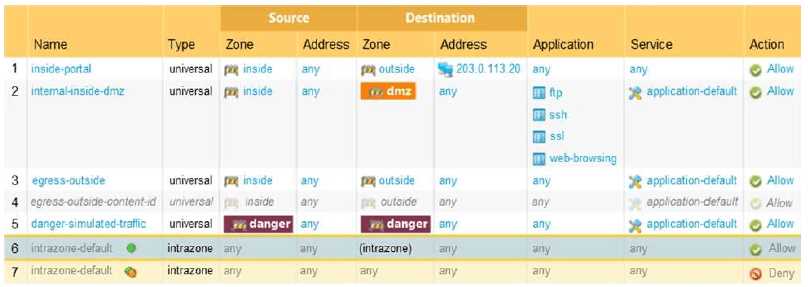
Based on the show security policy rule would match all FTP traffic from the inside zone to the outside zone? NetSec Analyst question
Options
13 comments in the community discussion
2
My pick: B, saw a similar question on a practice test and engress outside matched inside to outside FTP traffic.
2
Anyone double-checked if "engress outside" (B) is actually first in policy order? Remember from a mock that ordering matters, since firewall applies rules top to bottom. Just want to confirm we're all reading the zones right.
Q: 6
What are two valid selections within an Anti-Spyware profile? (Choose two.)
Options
15 comments in the community discussion
1
A and D, that's it. Both show up in actual Anti-Spyware profile action lists from what I've seen.
1
Probably A and B here. MPLS and broadband are standard SD-WAN choices. USB tethering isn't typical for enterprise links.
Q: 7
What are the two main reasons a custom application is created? (Choose two.)
Options
18 comments in the community discussion
1
B . I feel like changing the default categorization (B) makes sense since customizing apps often lets you set a different category if the built-in one doesn’t match your usage. A is tempting but for me B and maybe D fit better. Disagree?
1
A and D for sure. You create a custom app to spot your own internal stuff in the traffic logs, plus it helps get rid of all the unknown traffic entries that App-ID can't figure out. Pretty standard use case from what I've seen, but open if anyone's got another take.
Q: 8

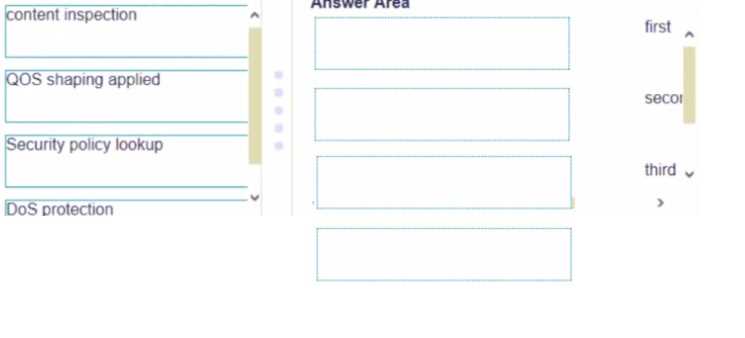
DRAG DROP Place the following steps in the packet processing order of operations from first to last. NetSec Analyst question

Drag & Drop
13 comments in the community discussion
6
Option B is right, both security and NAT rules are evaluated from top down. A is a common trap.
3
DoS protection, Security policy lookup, content inspection, QOS shaping applied. I don't think content inspection comes before DoS-trap for sure.
Q: 9
What do you configure if you want to set up a group of objects based on their ports alone?
Options
12 comments in the community discussion
1
B
1
B for sure, since service groups are meant just for grouping ports or port/protocol combos. Custom objects (D) are broader but not specific to ports. Makes more sense if you want only port-based groupings.
Q: 10

DRAG DROP Match each feature to the DoS Protection Policy or the DoS Protection Profile. NetSec Analyst question

Drag & Drop
16 comments in the community discussion
1
Next-Generation Firewall → Identifies and inspects all traffic, Threat Intelligence Cloud → Gathers/analyzes/correlates/disseminates threats, Advanced Endpoint Protection → Inspects processes/files. Swapped Threat Intelligence Cloud and Endpoint since I thought the cloud does more analysis directly on files. Pretty sur
1
Next-Generation Firewall -> Identifies/inspects all traffic, Threat Intelligence Cloud -> Analyzes/correlates/threat data, Advanced Endpoint Protection -> Inspects processes and files. I matched threat intelligence with process inspection since it does a lot of dynamic analysis in the cloud, but maybe that's s
Q: 11
Prior to a maintenance-window activity, the administrator would like to make a backup of only the running configuration to an external location. What command in Device > Setup > Operations would provide the most operationally efficient way to achieve this outcome?
Options
6 comments in the community discussion
1
C imo, A can trick you since that's just saving locally not exporting externally.
1
C tbh
Q: 12

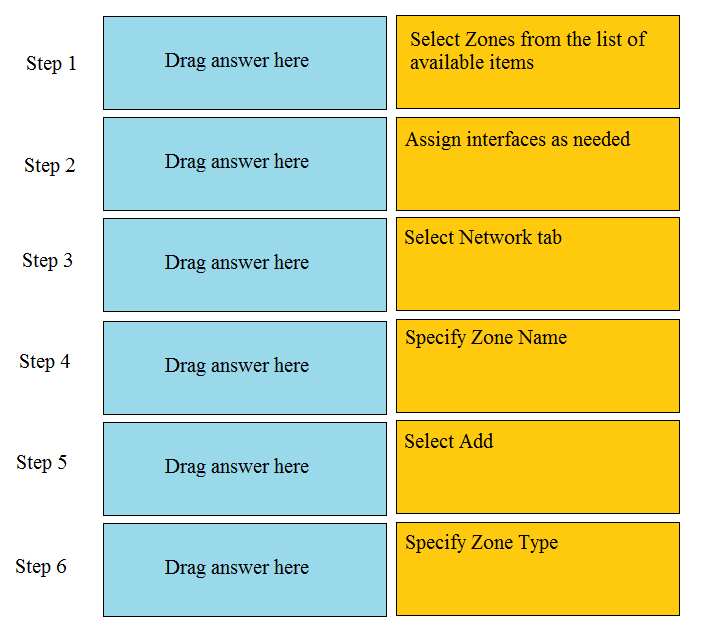
DRAG DROP Order the steps needed to create a new security zone with a Palo Alto Networks firewall. NetSec Analyst question

Drag & Drop
7 comments in the community discussion
2
A
1
Seen similar questions in the official guide and lab exercises, the typical order is:Select Network tab, Select Zones from the list of available items, Select Add, Specify Zone Name, Specify Zone Type, Assign interfaces as needed. Recommend checking the admin guide or doing it once in the VM lab just to be safe.
Q: 13
What are the two default behaviors for the intrazone-default policy? (Choose two.)
Options
5 comments in the community discussion
Probably A
Q: 14
In the PAN-OS Web Interface, which is a session distribution method offered under NAT Translated Packet Tab to choose how the firewall assigns sessions?
Options
6 comments in the community discussion
1
Had something like this in a mock, it's D.
1
Option D here, since file blocking would stop some types of attack payloads before reaching the server. I could be missing something, but I don't see why SYN flood wouldn't be mitigated by blocking suspicious files. If I'm off base let me know.
Q: 15
How do you reset the hit count on a security policy rule?
Options
7 comments in the community discussion
1
D , since I remember seeing a reset hitcount CLI command in some guides. Maybe it's version specific but shouldn't that work?
1
Probably A and C
Q: 16
Which two firewall components enable you to configure SYN flood protection thresholds? (Choose two.)
Options
4 comments in the community discussion
2
B . QoS profile (A) is kind of a trap here, only B and C let you actually set those SYN thresholds.
1
Call it it's B and C. SYN flood thresholds are set in both Zone Protection and DoS Protection profiles in Palo Alto firewalls. QoS is for bandwidth, not anti-flood, and DoS policy just applies the profile but doesn't hold the thresholds itself. Let me know if you see it differently!
Q: 17
Choose the option that correctly completes this statement. A Security Profile can block or allow traffic ____________.
Options
1 comment in the community discussion
4
Option B Only applies after a rule allows the session, otherwise profiles don’t even get triggered. Some folks mix this up because of how profiles can block after allow. Disagree?
Q: 18
An administrator is configuring a NAT rule At a minimum, which three forms of information are required? (Choose three.)
Options
5 comments in the community discussion
C tbh. Was thinking destination interface since it’s common in device configs and you often tie NAT rules to where the traffic exits. Not fully sure but feels logical. Open to correction if anyone has docs saying otherwise.
Option B D, E. Super clear question layout, matches what I've seen in similar exam reports.
Q: 19
Which two components are utilized within the Single-Pass Parallel Processing architecture on a Palo Alto Networks Firewall? (Choose two.)
Options
5 comments in the community discussion
1
For me, B and D make sense since User-ID and App-ID are directly built into the SP3 flow. C looks tempting because QoS is supported, but it's not part of the Single-Pass engine's main identification process. I’m pretty confident based on Palo Alto docs, agree?
B and D, saw it like this on a similar exam set.
Q: 20

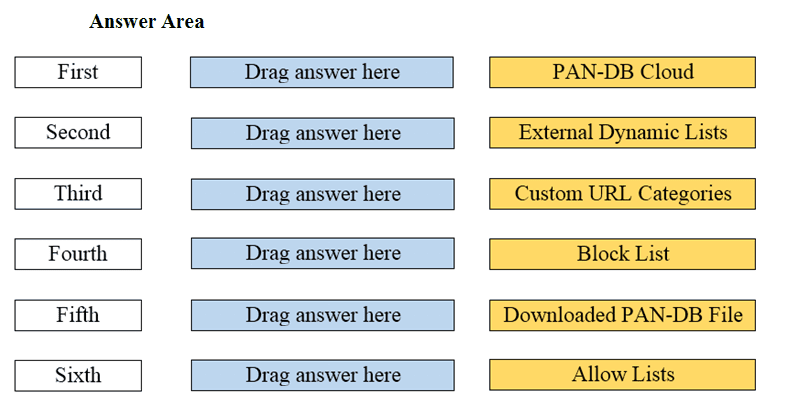
DRAG DROP Arrange the correct order that the URL classifications are processed within the system. NetSec Analyst question

Drag & Drop
2 comments in the community discussion
8
Makes sense: Block List, Allow Lists, Custom URL Categories, External Dynamic Lists, Downloaded PAN-DB File, PAN-DB Cloud.
5
Yeah, I've seen similar order on practice tests. It should be Block List, then Allow Lists, Custom URL Categories, External Dynamic Lists, Downloaded PAN-DB File, and finally PAN-DB Cloud. Pretty sure that's the right processing flow but happy to hear if anyone sees it different.
Question 1 of 20

What's covered in this practice questions set

5: Cloud Security · 13 questions

📖 About this Domain

This domain covers securing public cloud environments and cloud-native applications. You will learn about Prisma Cloud's role in providing comprehensive visibility, threat prevention, and compliance enforcement across multi-cloud infrastructures.

🎓 What You Will Learn

  • You will learn the core components of Prisma Cloud, including its Cloud Security Posture Management (CSPM) and Cloud Workload Protection Platform (CWPP) functionalities.
  • You will understand how to onboard cloud accounts and configure security policies for continuous monitoring and compliance.
  • You will learn to analyze security alerts related to misconfigurations, vulnerabilities, and runtime threats in cloud assets.
  • You will explore methods for enforcing compliance with industry standards like CIS, GDPR, and HIPAA using Prisma Cloud.

🛠️ Skills You Will Build

  • You will build skills in identifying and remediating security risks in Infrastructure as Code (IaC) templates and container images.
  • You will develop the ability to investigate security incidents using Prisma Cloud's asset inventory and alert data.
  • You will gain proficiency in configuring runtime protection policies for hosts, containers, and serverless functions.
  • You will build competence in using Resource Query Language (RQL) to create custom queries for threat hunting and compliance checks.

💡 Top Tips to Prepare

  • Focus on understanding the Prisma Cloud alert lifecycle from initial detection through to remediation.
  • Memorize the key differences between Prisma Cloud's security pillars: Code Security, CSPM, CWPP, and Cloud Network Security.
  • Practice navigating the Prisma Cloud console to locate specific asset information and security findings efficiently.
  • Review the official Prisma Cloud Administrator's Guide for detailed information on policy types and configuration options.

4: Network Security · 5 questions

📖 About this Domain

This domain covers the core functions of network security within the Palo Alto Networks Security Operating Platform. It focuses on the configuration and management of Next-Generation Firewalls (NGFWs) to control traffic and prevent threats. You will learn how security policies are processed to secure network assets.

🎓 What You Will Learn

  • You will learn to configure Security Policy rules using App-ID, User-ID, and Content-ID for granular traffic control.
  • You will understand how to implement Network Address Translation (NAT) policies for source and destination IP address mapping.
  • You will learn to apply security profiles like Antivirus, Anti-Spyware, and Vulnerability Protection to block known and unknown threats.
  • You will explore the configuration of SSL Forward Proxy decryption to inspect encrypted traffic for policy enforcement.

🛠️ Skills You Will Build

  • You will build the skill to analyze traffic logs to verify security policy enforcement and troubleshoot connectivity issues.
  • You will develop the ability to interpret threat logs and correlate security profile actions with specific attack attempts.
  • You will gain proficiency in using packet captures and session details to diagnose complex traffic processing on the firewall.
  • You will build skills in security rulebase optimization by identifying shadowed, redundant, and overly permissive policies.

💡 Top Tips to Prepare

  • Master the PAN-OS packet flow logic to accurately predict how the NGFW processes specific sessions.
  • Practice configuring Security, NAT, and Decryption policies in a lab environment using the web interface and CLI.
  • Focus on the interaction between security profiles and Security Policy rules to understand layered threat prevention.
  • Review Palo Alto Networks security best practices for rulebase management and policy implementation.

1: Fundamentals of Cybersecurity · 2 questions

📖 About this Domain

This domain establishes the foundational knowledge of the modern threat landscape. It covers core cybersecurity principles, attack methodologies, and the technologies used for defense.

🎓 What You Will Learn

  • You will learn to identify the stages of the cyber-attack lifecycle and the concept of a kill chain.
  • You will learn to differentiate between various threat types, including malware, phishing, and denial-of-service attacks.
  • You will learn to recognize different threat actors and their motivations, from hacktivists to nation-states.
  • You will learn the basic principles of cryptography, including symmetric and asymmetric encryption.

🛠️ Skills You Will Build

  • You will build the skill to map observed activity to specific stages of the cyber-attack lifecycle.
  • You will build the ability to classify threats based on their delivery vectors and payloads.
  • You will build competence in describing fundamental network security zoning and trust level concepts.
  • You will build the skill to apply the Zero Trust security model principles to a given scenario.

💡 Top Tips to Prepare

  • Focus on understanding each phase of the Cyber-Attack Lifecycle as defined by Palo Alto Networks.
  • Practice identifying attack vectors and vulnerabilities in sample network topologies.
  • Study the characteristics of common malware families and exploit kits.
  • Review the Palo Alto Networks Cybersecurity Survival Guide for foundational terminology.

3: Cybersecurity Story

📖 About this Domain

This domain covers the complete narrative of a cyberattack, from initial compromise to final objective. It emphasizes connecting individual alerts and data points to understand the full attack lifecycle. You will analyze the sequence of events to determine the root cause and scope of an incident.

🎓 What You Will Learn

  • You will learn to map observed malicious activity to the stages of the cyberattack lifecycle.
  • You will learn to use Cortex XDR to investigate causality chains and process trees for root cause analysis.
  • You will learn to correlate disparate data sources, including logs and endpoint telemetry, to build a coherent incident timeline.
  • You will learn to identify attacker Tactics, Techniques, and Procedures (TTPs) using frameworks like MITRE ATT&CK.

🛠️ Skills You Will Build

  • You will build the skill to perform root cause analysis (RCA) by tracing an alert back to its origin.
  • You will build the skill to reconstruct the full attack narrative by synthesizing multiple pieces of evidence.
  • You will build the skill to determine the scope and impact of a security incident.
  • You will build the skill to articulate the cybersecurity story for incident response and reporting.

💡 Top Tips to Prepare

  • Master the Cortex XDR causality view to understand process relationships and event sequences.
  • Practice analyzing case studies to trace the attack path from initial alert to root cause.
  • Memorize the cyberattack lifecycle stages and their associated indicators of compromise (IOCs).
  • Familiarize yourself with how Palo Alto Networks products map alerts and events to the MITRE ATT&CK framework.

6: SecOps

📖 About this Domain

The SecOps domain covers the core principles of a modern Security Operations Center (SOC) utilizing the Palo Alto Networks security platform. It focuses on the operational lifecycle of detecting, investigating, and responding to cyber threats. This involves leveraging integrated tools for efficient incident management and threat hunting.

🎓 What You Will Learn

  • You will learn the stages of the incident response lifecycle and how Palo Alto Networks products map to each phase.
  • You will learn to use Cortex XDR for alert triage, causality chain analysis, and endpoint investigation.
  • You will learn the fundamentals of Security Orchestration, Automation, and Response (SOAR) using Cortex XSOAR playbooks.
  • You will learn how to integrate threat intelligence from sources like WildFire and AutoFocus to enrich security incidents.

🛠️ Skills You Will Build

  • You will build the skill to analyze and prioritize security alerts based on severity and contextual data.
  • You will build the ability to perform root cause analysis by investigating endpoint, network, and cloud telemetry in Cortex XDR.
  • You will build proficiency in using the XDR Query Language (XQL) for proactive threat hunting.
  • You will build an understanding of how to apply automation playbooks to standardize and accelerate incident response actions.

💡 Top Tips to Prepare

  • Focus on the Cortex XDR console, specifically understanding the incident view, causality chains, and agent actions.
  • Memorize the standard incident response framework and be able to map specific tool functions to each stage.
  • Understand the concept of a playbook in Cortex XSOAR and its role in automating SOC tasks like enrichment and containment.
  • Practice interpreting XQL queries to understand how analysts search for indicators of compromise (IOCs) across datasets.

2: The Threat Landscape

📖 About this Domain

This domain covers the modern cyber threat landscape, focusing on the methods and motivations of malicious actors. You will identify common attack vectors and the stages of a typical network intrusion.

🎓 What You Will Learn

  • Identify common attack vectors including phishing, malware, and web-based exploits.
  • Understand the seven stages of the Cyber-Attack Lifecycle, from reconnaissance to acting on objectives.
  • Differentiate between threat actor types such as Advanced Persistent Threats (APTs), hacktivists, and cybercriminals.
  • Recognize various Command-and-Control (C2) techniques used by malware to communicate with attackers.

🛠️ Skills You Will Build

  • Analyzing attack patterns to map them to the Cyber-Attack Lifecycle.
  • Differentiating between malware types like viruses, worms, ransomware, and spyware.
  • Identifying Indicators of Compromise (IoCs) associated with specific threats.
  • Correlating threat intelligence from sources like Unit 42 with observed network events.

💡 Top Tips to Prepare

  • Memorize each stage of the Palo Alto Networks Cyber-Attack Lifecycle and its purpose.
  • Study recent Unit 42 threat intelligence reports to understand current attack trends.
  • Focus on the motivations that drive different threat actor groups.
  • Practice identifying the methods used for reconnaissance, weaponization, and delivery in attack scenarios.

Premium Access Includes

  • Quiz Simulator
  • Exam Mode
  • Progress Tracking
  • Question Saving
  • Flash Cards
  • Drag & Drops
  • 3 Months Access
  • PDF Downloads
Get Premium Access
Scroll to Top

FLASH OFFER

Days
Hours
Minutes
Seconds

avail 10% DISCOUNT on YOUR PURCHASE