The metadata in the exhibit reveals a strong indicator that this .LNK file (shortcut) is malicious:
The shortcut file is named "ds7002.pdf" but actually points to the execution of PowerShell:
→ Full path: C:\Windows\System32\WindowsPowerShell\v1.0\powershell.exe
Arguments include:
→ -noni -ep bypass $z = '...'; indicating an attempt to run a PowerShell script with execution policy
bypassed (a known tactic for fileless malware delivery).
The file is masked as a PDF (common social engineering technique), and PowerShell execution via
.LNK is a signature technique used by many malware families to initiate second-stage payloads or
scripts.
Given this, the correct and safest course of action is to:
→ Open the .LNK file in a sandbox environment (D).
This enables safe behavioral analysis to observe what actions it attempts upon execution without
endangering live systems.
Other options are inappropriate:
A (ignoring the threat due to extension) is dangerous — .LNKs can trigger code.
B (upload to virus engine) is only helpful for known malware and lacks behavioral context.
C (quarantine) is preventive but not investigative — sandboxing provides visibility.
Reference: CyberOps Technologies (CBRFIR) 300-215 study guide, Chapter on “Threat Hunting and
Malware Analysis,” section covering shortcut (.LNK) based attacks, PowerShell-based threats, and
sandbox behavioral analysis strategies.

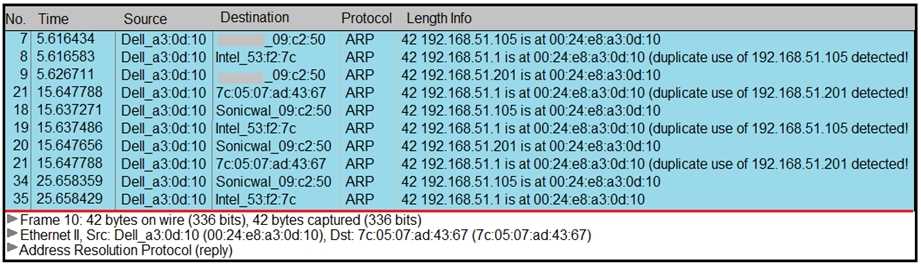 A security analyst notices unusual connections while monitoring traffic. What is the attack vector,
and which action should be taken to prevent this type of event?
A security analyst notices unusual connections while monitoring traffic. What is the attack vector,
and which action should be taken to prevent this type of event?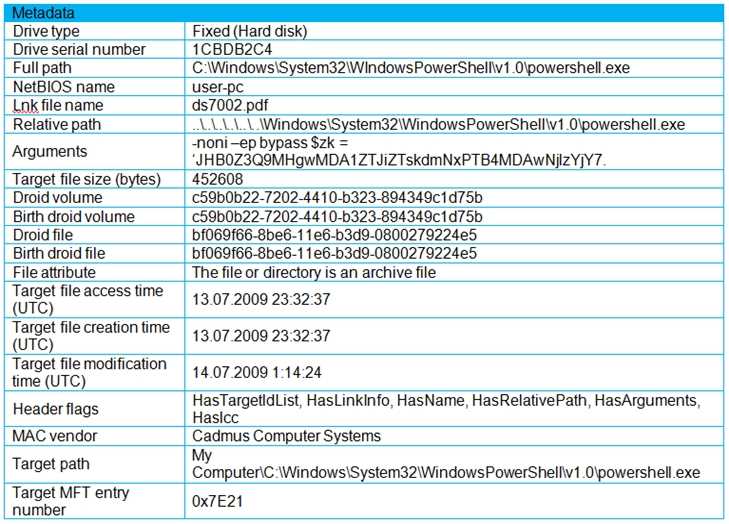 An engineer is analyzing a .LNK (shortcut) file recently received as an email attachment and blocked
by email security as suspicious. What is the next step an engineer should take?
An engineer is analyzing a .LNK (shortcut) file recently received as an email attachment and blocked
by email security as suspicious. What is the next step an engineer should take?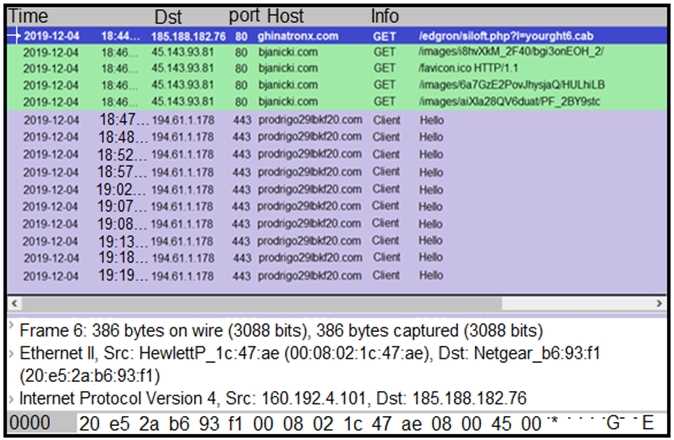 A network engineer is analyzing a Wireshark file to determine the HTTP request that caused the
initial Ursnif banking Trojan binary to download. Which filter did the engineer apply to sort the
Wireshark traffic logs?
A network engineer is analyzing a Wireshark file to determine the HTTP request that caused the
initial Ursnif banking Trojan binary to download. Which filter did the engineer apply to sort the
Wireshark traffic logs?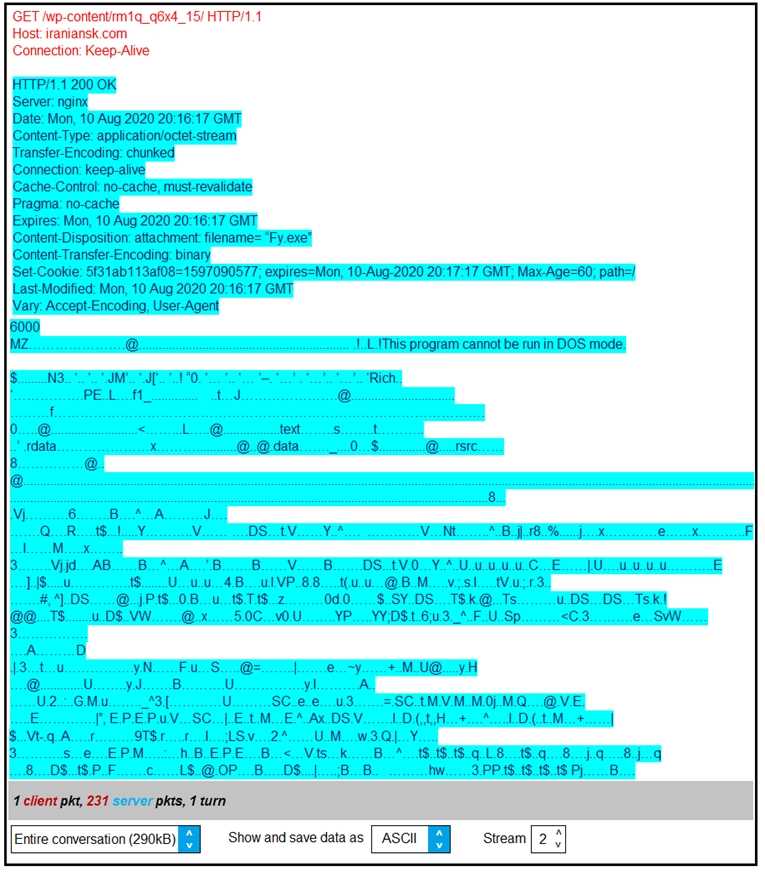 According to the Wireshark output, what are two indicators of compromise for detecting an Emotet
malware download? (Choose two.)
According to the Wireshark output, what are two indicators of compromise for detecting an Emotet
malware download? (Choose two.)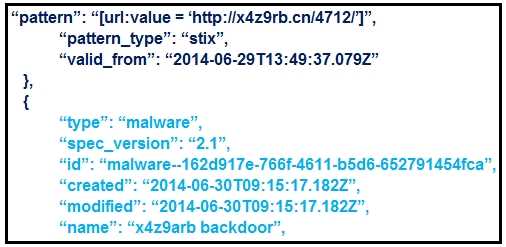 What is the IOC threat and URL in this STIX JSON snippet?
 A security analyst is reviewing alerts from the SIEM system that was just implemented and notices a
possible indication of an attack because the SSHD system just went live and there should be nobody
using it. Which action should the analyst take to respond to the alert?
A security analyst is reviewing alerts from the SIEM system that was just implemented and notices a
possible indication of an attack because the SSHD system just went live and there should be nobody
using it. Which action should the analyst take to respond to the alert? What should be determined from this Apache log?
 An engineer is analyzing a TCP stream in Wireshark after a suspicious email with a URL. What should
be determined about the SMB traffic from this stream?
An engineer is analyzing a TCP stream in Wireshark after a suspicious email with a URL. What should
be determined about the SMB traffic from this stream?