Cloud+ CV0-004.pdf
An administrator is setting up a cloud backup solution that requires the following features:
• Cost effective
• Granular recovery
• Multilocation
Which of the following backup types best meets these requirements?
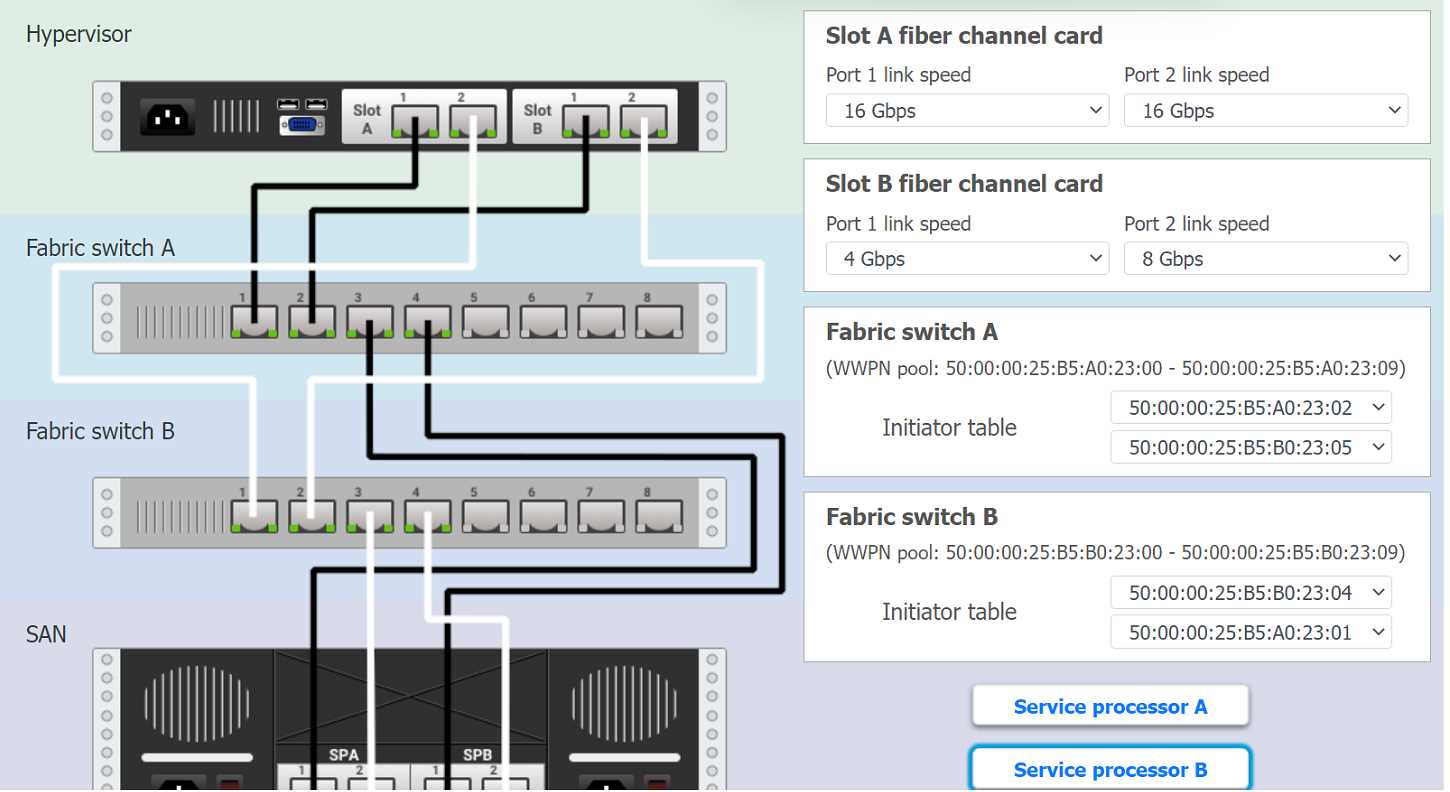
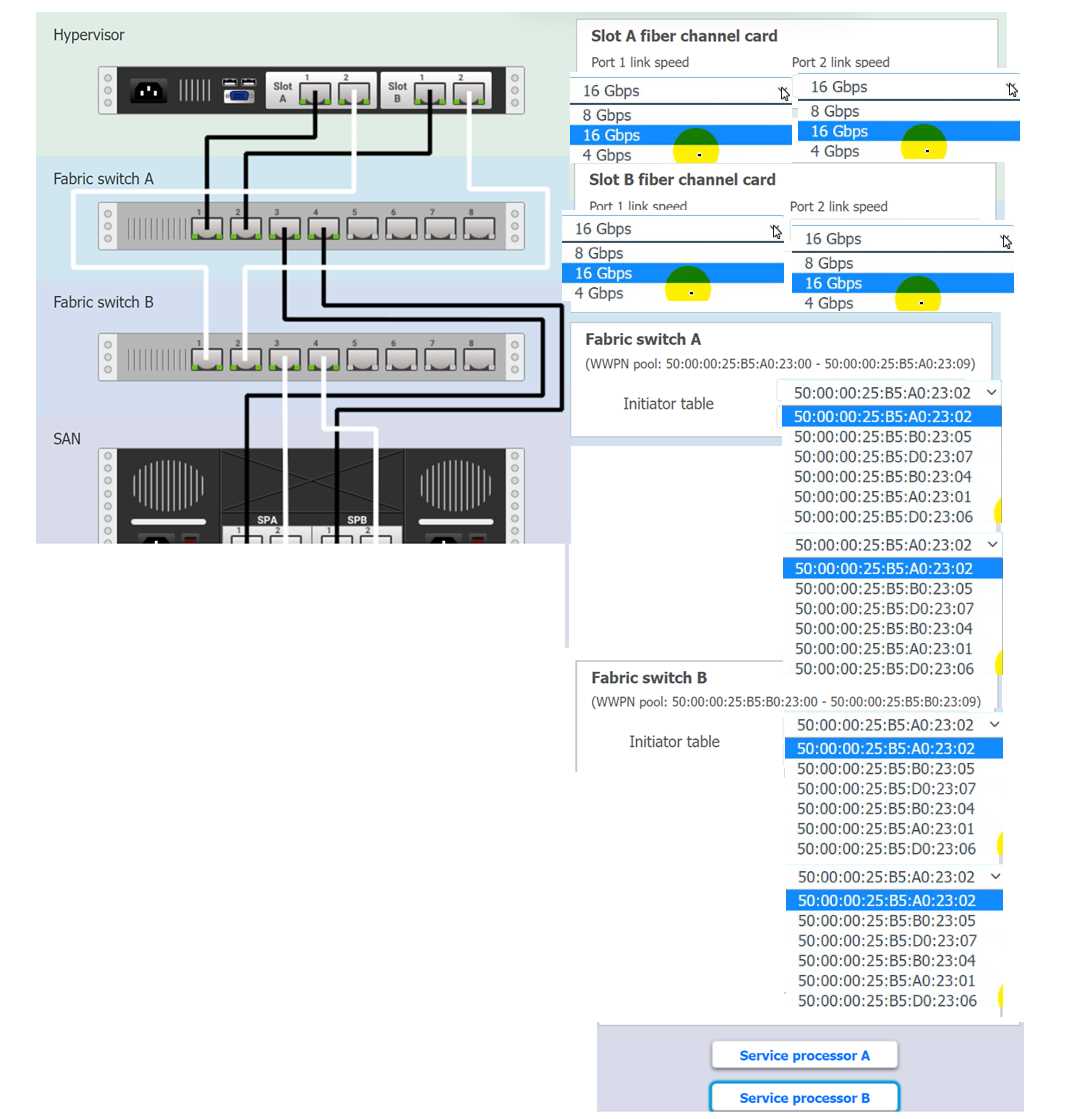
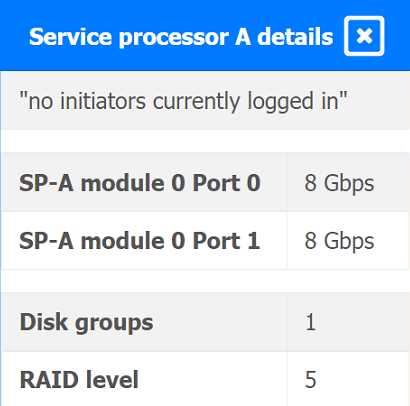
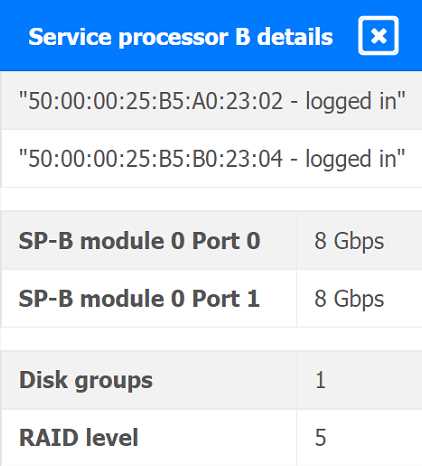
You are a cloud engineer working for a cloud service provider that is responsible for an IaaS offering. Your customer, who creates VMs and manages virtual storage, has noticed I/O bandwidth issues and low IOPS (under 9000). Your manager wants you to verify the proper storage configuration as dictated by your service level agreement (SLA). The SLA specifies: . Each SFP on the hypervisor host must be set to the maximum link speed allowed by the SAN array. . All SAN array disk groups must be configured in a RAID 5. . The SAN array must be fully configured for redundant fabric paths. . IOPS should not fall below 14000 INSTRUCTIONS Click on each service processor to review the displayed information. Then click on the drop-down menus to change the settings of each device as necessary to conform to the SLA requirements.

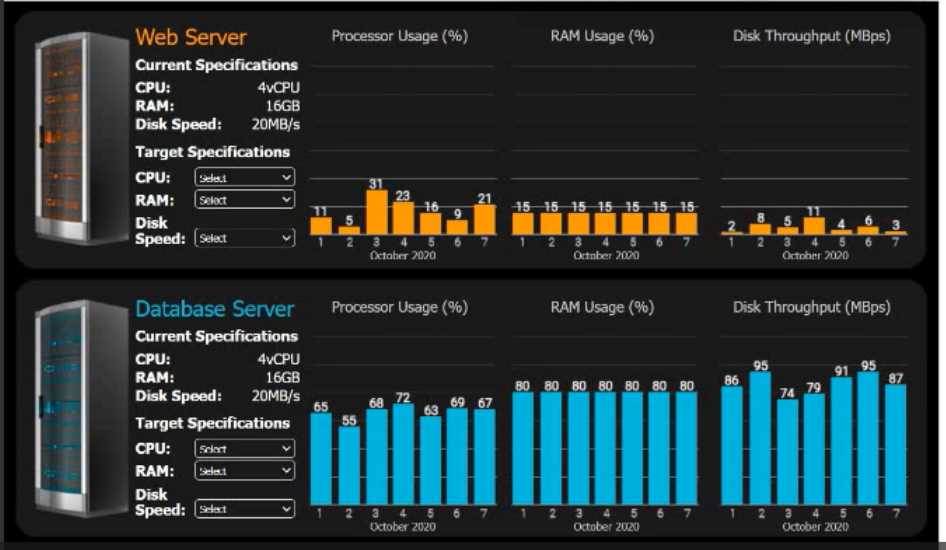
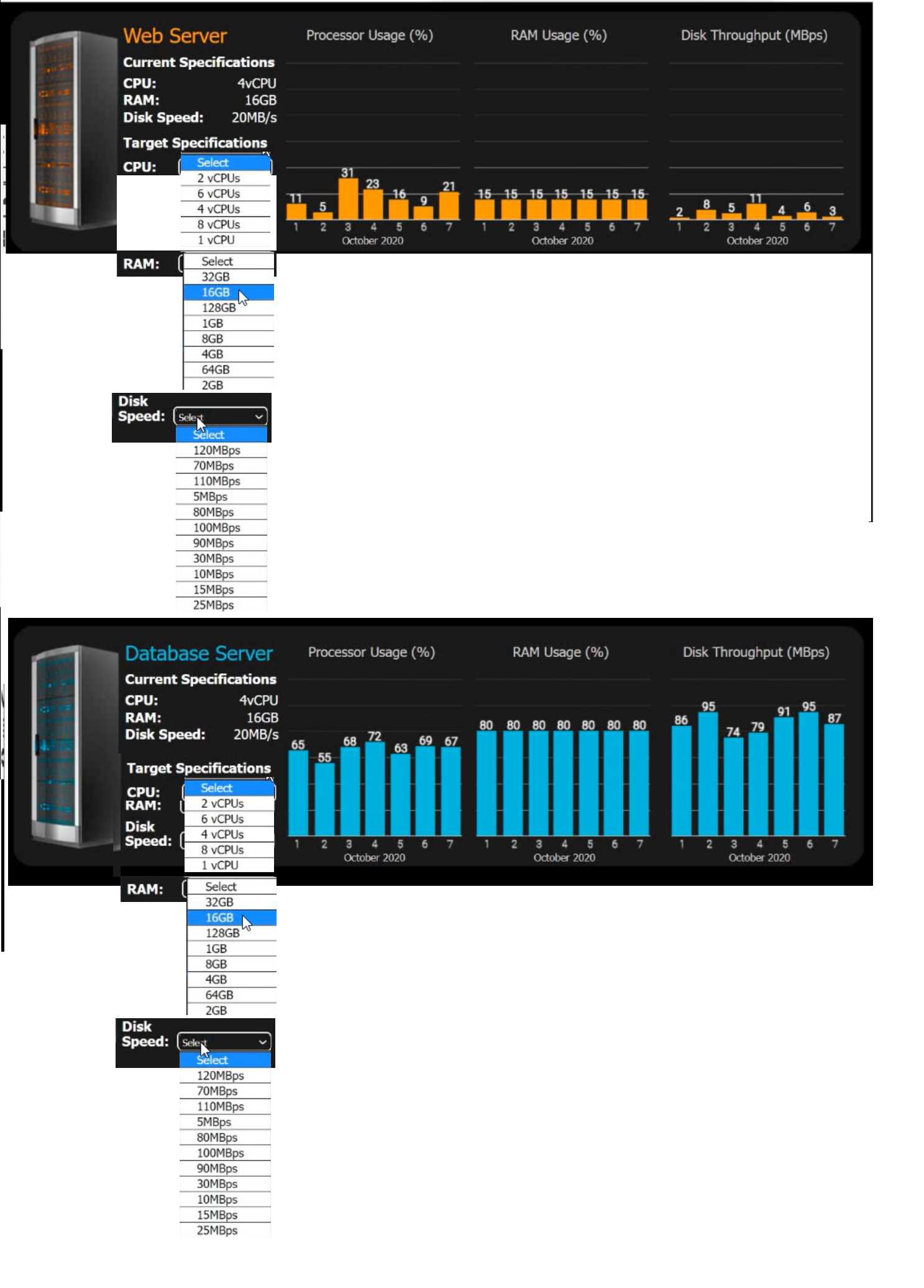
HOTSPOT An e-commerce company is migrating from an on-premises private cloud environment to a public cloud IaaS environment. You are tasked with right-sizing the environment to save costs after the migration. The company's requirements are to provide a 20% overhead above the average resource consumption, rounded up. INSTRUCTIONS Review the specifications and graphs showing resource usage for the web and database servers. Determine the average resource usage and select the correct specifications from the available drop- down options.

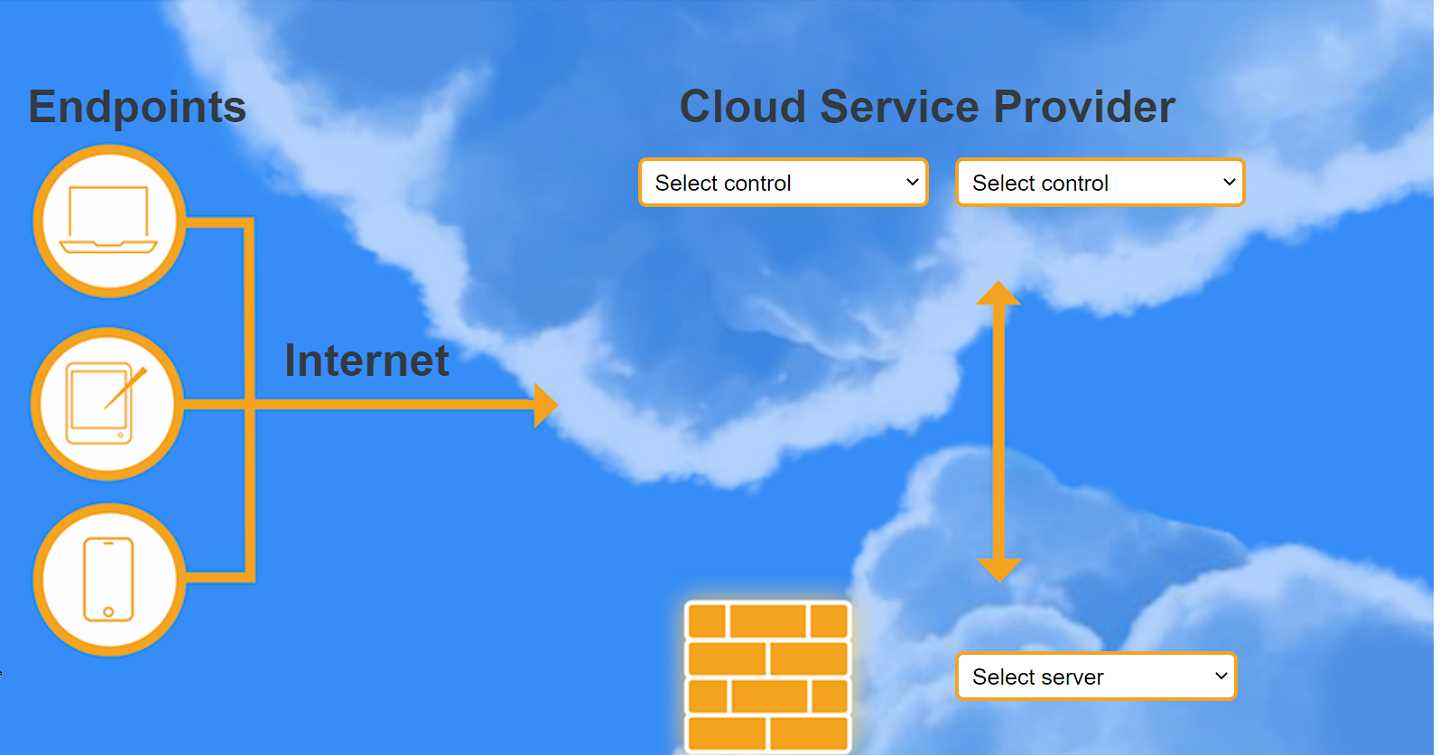
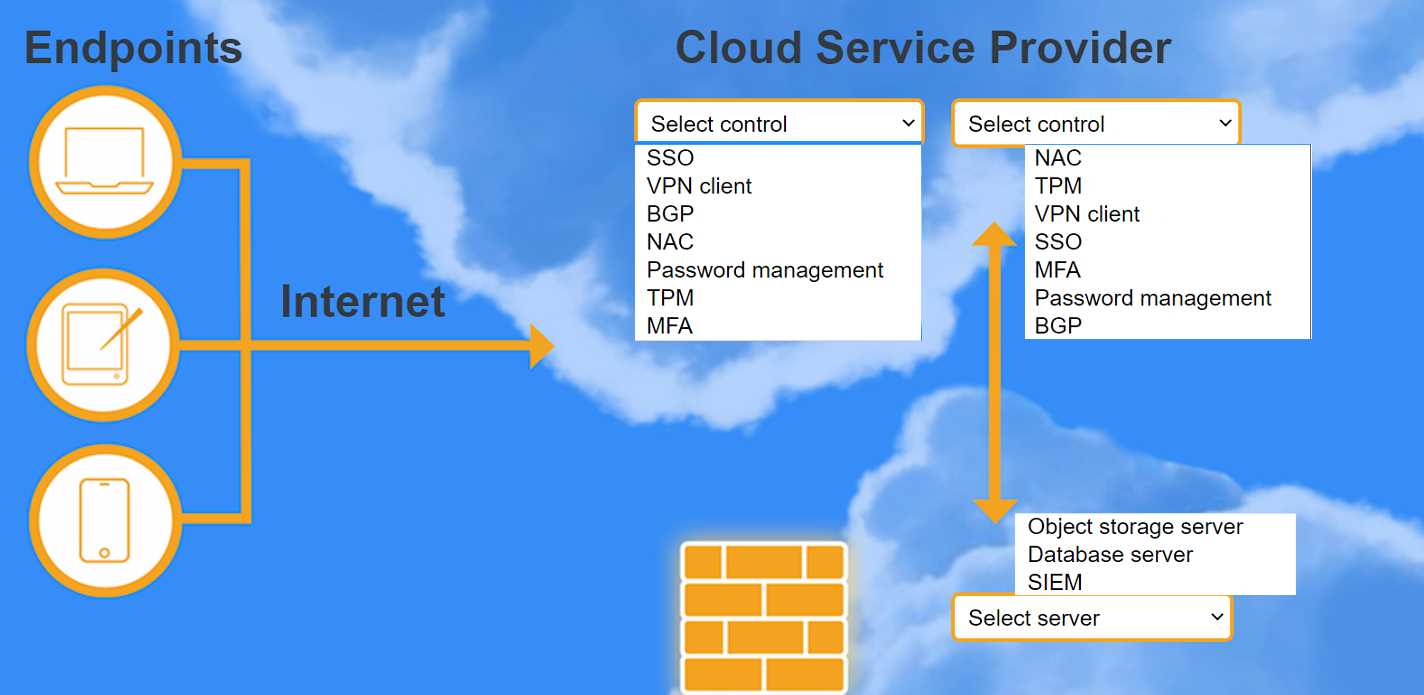
HOTSPOT A highly regulated business is required to work remotely, and the risk tolerance is very low. You are tasked with providing an identity solution to the company cloud that includes the following: secure connectivity that minimizes user login tracks user activity and monitors for anomalous activity requires secondary authentication INSTRUCTIONS Select controls and servers for the proper control points.

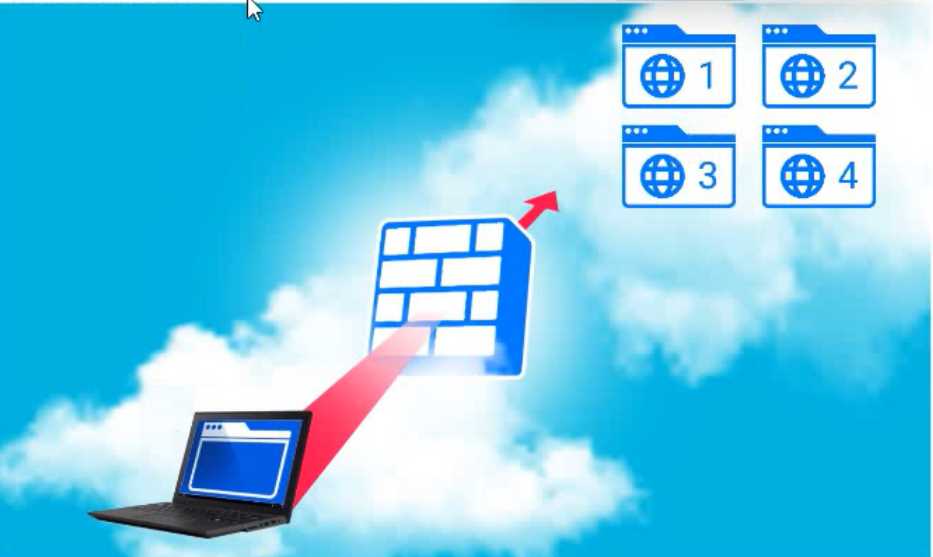
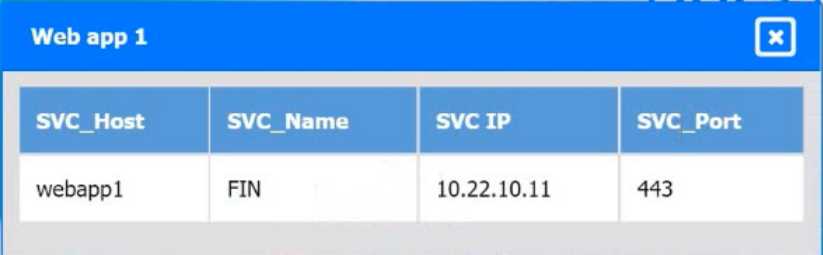
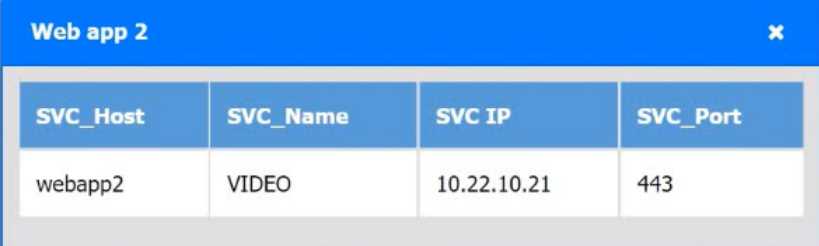
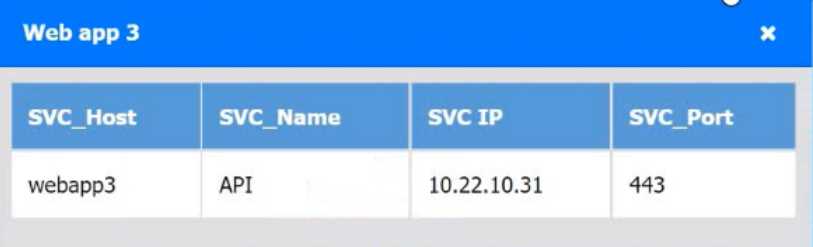
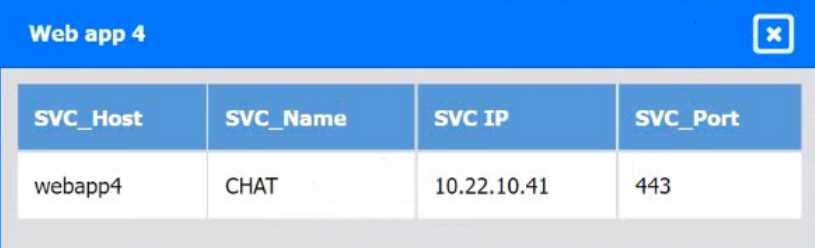
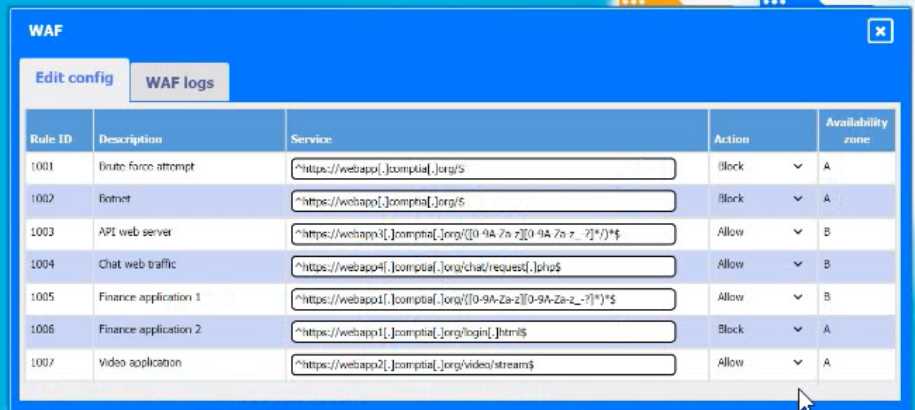
A company hosts various containerized applications for business uses. A client reports that one of its routine business applications fails to load the web-based login prompt hosted in the company cloud. Click on each device and resource. Review the configurations, logs, and characteristics of each node in the architecture to diagnose the issue. Then, make the necessary changes to the WAF configuration to remediate the issue.

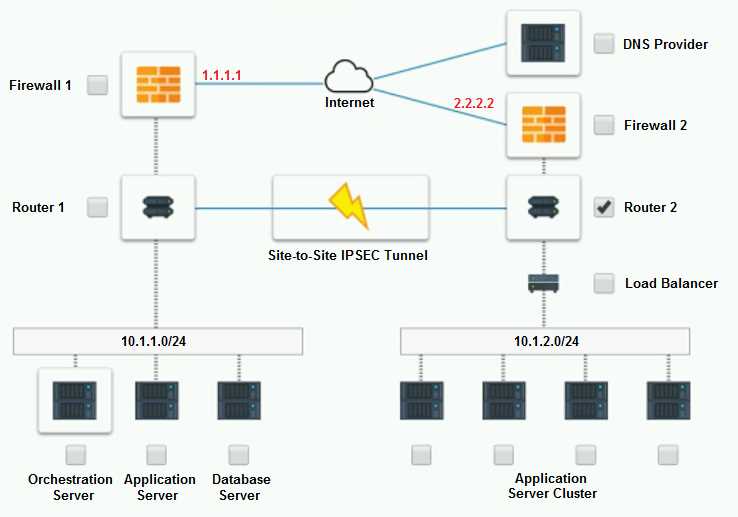
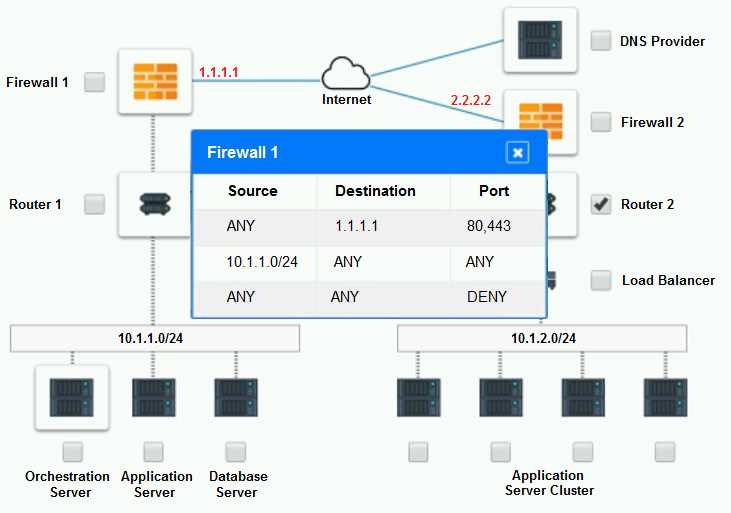
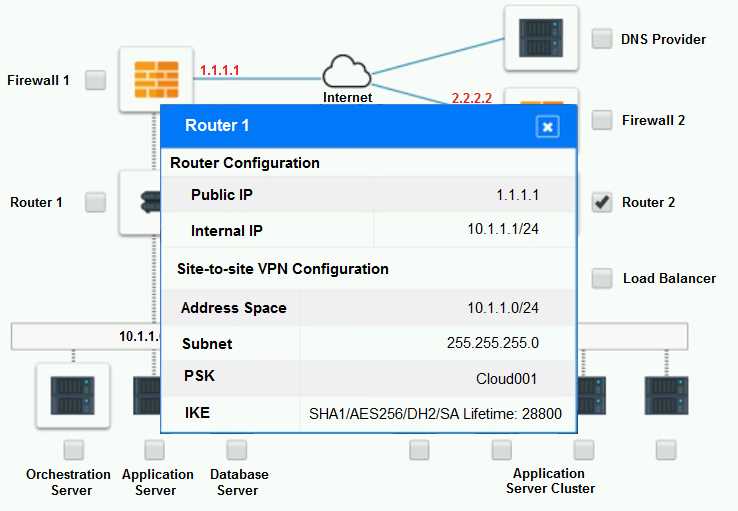
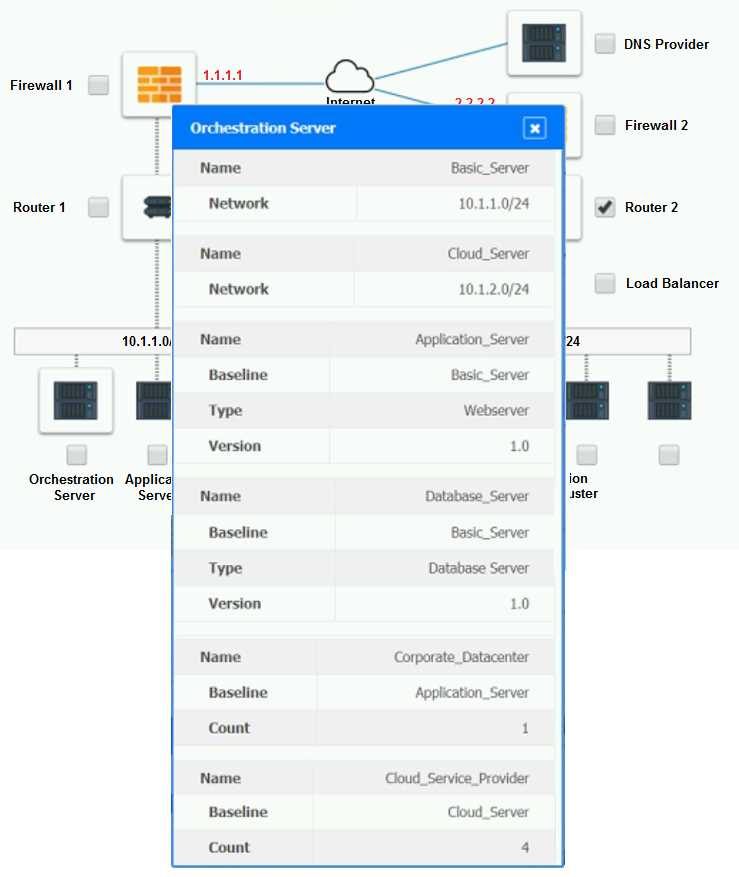
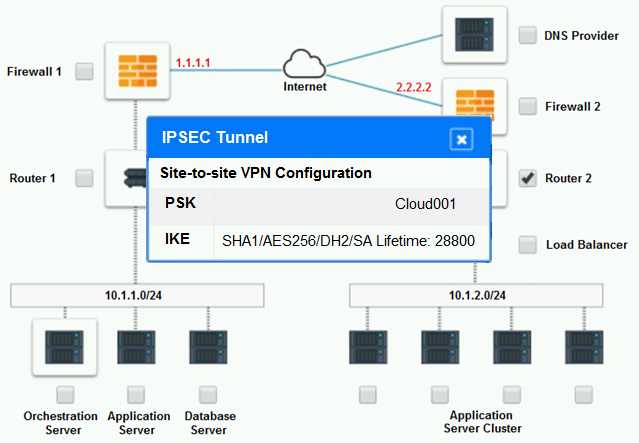
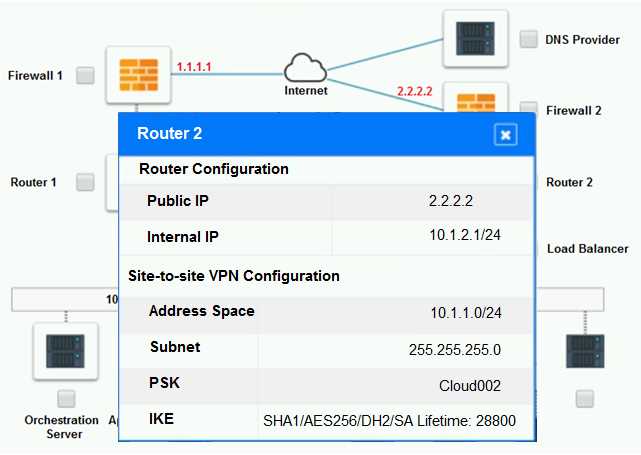
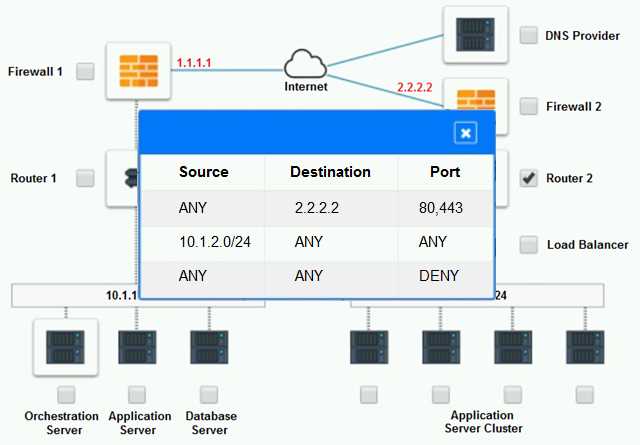
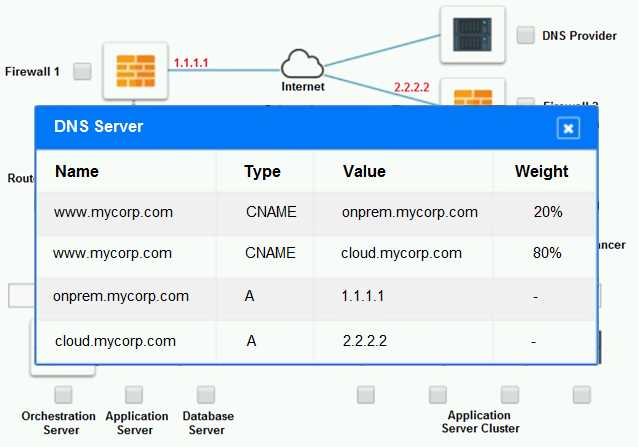
A company has decided to scale its e-commerce application from its corporate datacenter to a commercial cloud provider to meet an anticipated increase in demand during an upcoming holiday. The majority of the application load takes place on the application server under normal conditions. For this reason, the company decides to deploy additional application servers into a commercial cloud provider using the on-premises orchestration engine that installs and configures common software and network configurations. The remote computing environment is connected to the on-premises datacenter via a site-to-site IPSec tunnel. The external DNS provider has been configured to use weighted round-robin routing to load balance connections from the Internet.
During testing, the company discovers that only 20% of connections completed successfully.
INSTRUCTIONS
Review the network architecture and supporting documents and fulfill these requirements:
Part 1:
Analyze the configuration of the following components: DNS, Firewall 1, Firewall 2, Router 1, Router
2, VPN and Orchestrator Server.
Identify the problematic device(s).
Part 2:
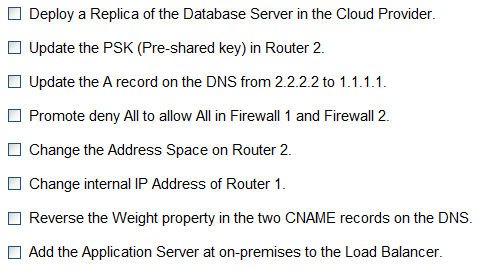
Identify the correct options to provide adequate configuration for hybrid cloud architecture.
If at any time you would like to bring back the initial state of the simulation, please click the Reset All
button.
Part 1:
Cloud Hybrid Network Diagram


Part 2:
Only select a maximum of TWO options from the multiple choice question

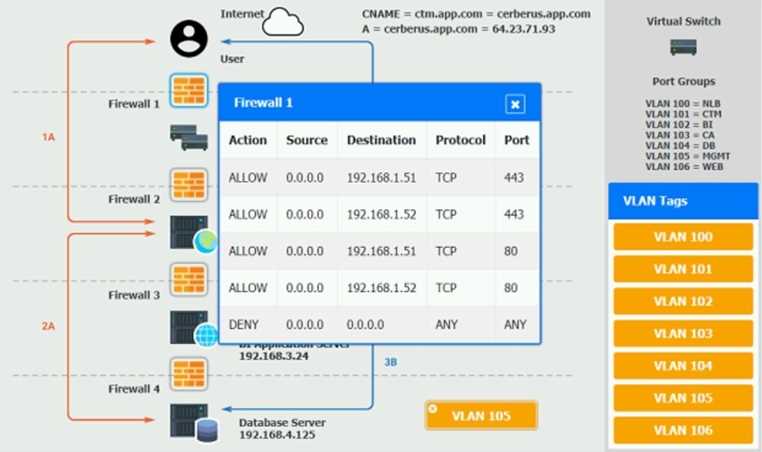
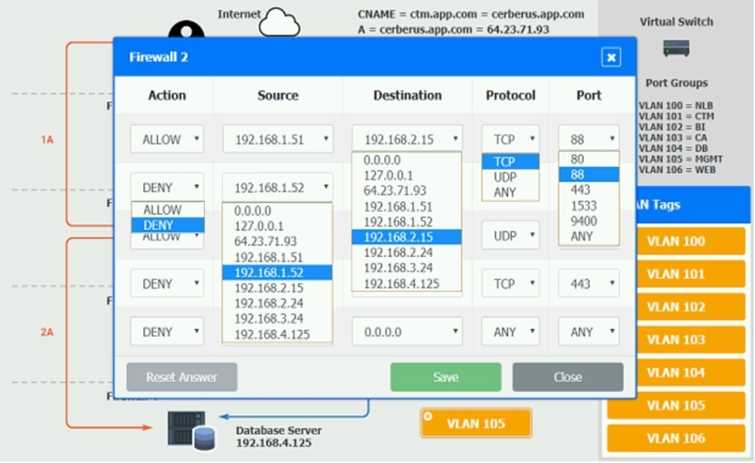
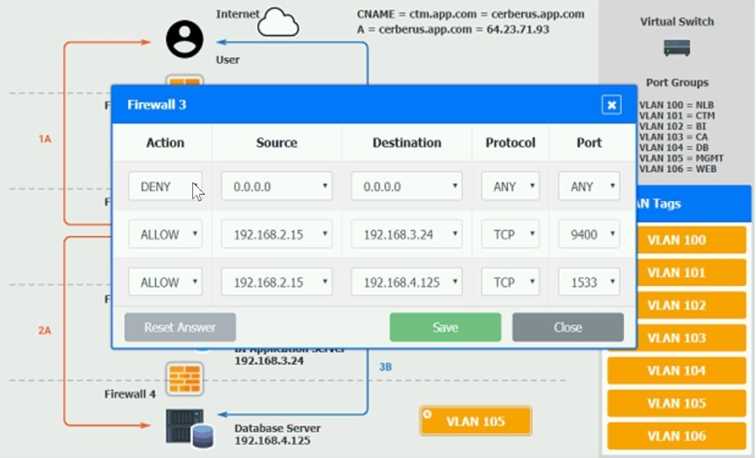
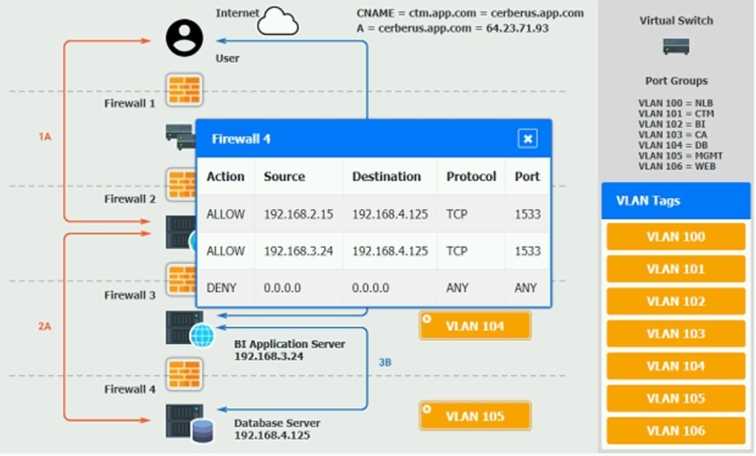
The QA team is testing a newly implemented clinical trial management (CTM) SaaS application that uses a business intelligence application for reporting. The UAT users were instructed to use HTTP and HTTPS.
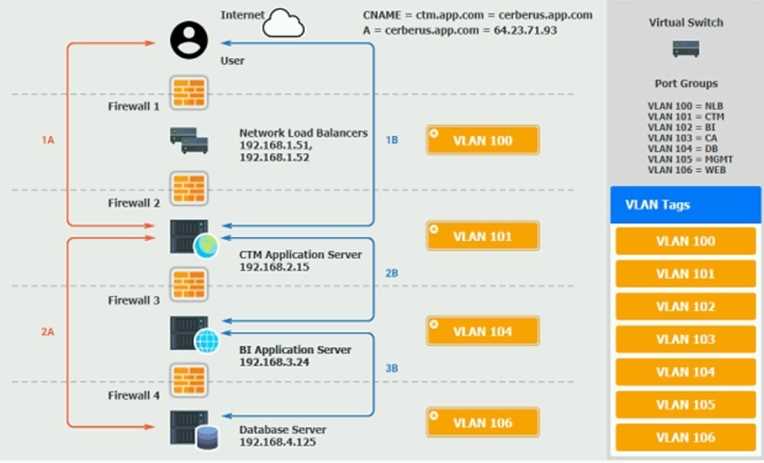
Refer to the application dataflow:
1A – The end user accesses the application through a web browser to enter and view clinical data.
2A – The CTM application server reads/writes data to/from the database server.
1B – The end user accesses the application through a web browser to run reports on clinical data.
2B – The CTM application server makes a SOAP call on a non-privileged port to the BI application server.
3B – The BI application server gets the data from the database server and presents it to the CTM application server.
When UAT users try to access the application using https://ctm.app.com or http://ctm.app.com, they get a message stating: “Browser cannot display the webpage.” The QA team has raised a ticket to troubleshoot the issue.
INSTRUCTIONS
You are a cloud engineer who is tasked with reviewing the firewall rules as well as virtual network settings.
You should ensure the firewall rules are allowing only the traffic based on the dataflow.
You have already verified the external DNS resolution and NAT are working.
Verify and appropriately configure the VLAN assignments and ACLs. Drag and drop the appropriate
VLANs to each tier from the VLAN Tags table. Click on each Firewall to change ACLs as needed.
If at any time you would like to bring back the initial state of the simulation, please click the Reset All button.


After configuring the servers, the administrator notices that during certain hours of the day, the
performance heavily degrades. Which of the following is the best explanation?